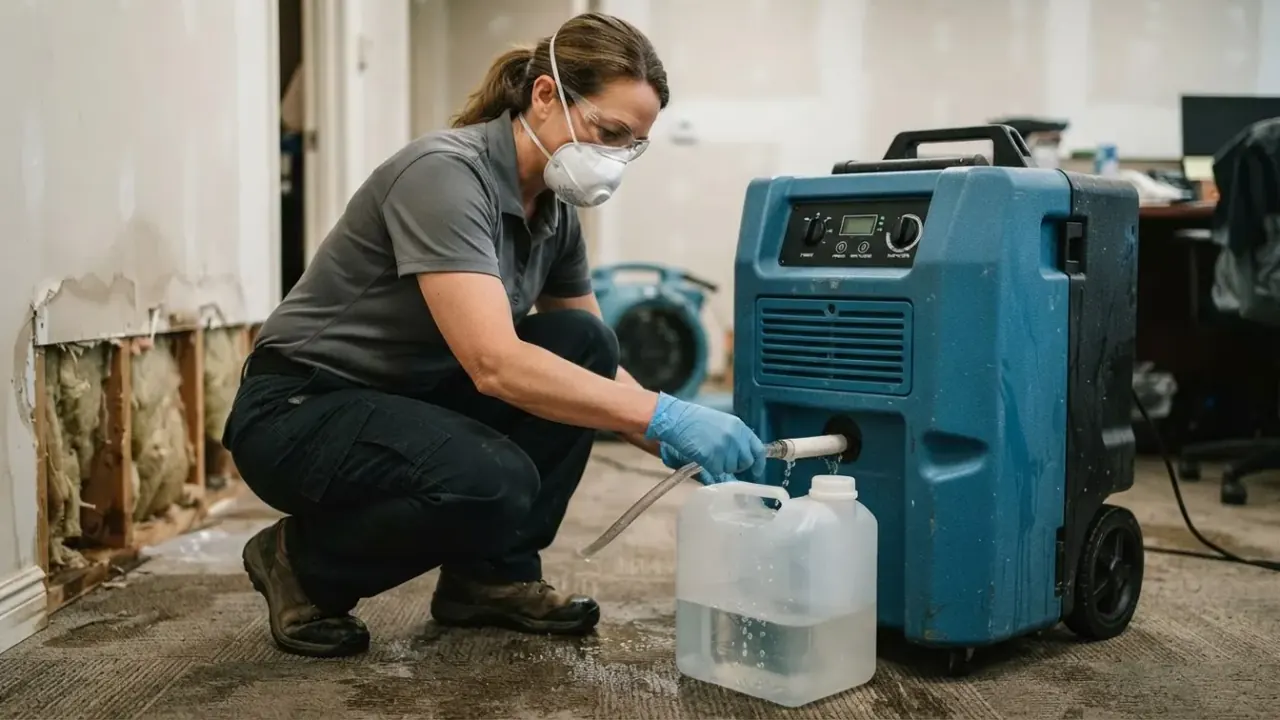
For Homeowners
Mitigation limits what the water costs you: the source stopped, the water out, drying under way before damage spreads.
- Family homes across Flagstaff's neighbourhoods
- Caught early, most materials can be dried in place
Water mitigation services in Flagstaff, AZ are the first phase of every water damage job: stop the source, extract the standing water, dry the structure, and protect what can still be saved — the phase that decides how big the loss gets. In Flagstaff it runs in two seasons: freeze and monsoon.
 Source stopped firstMeasured dryingDamage contained
The work that stops a water loss from growing: stop the source, get the water out, dry the structure, and protect what can be saved.
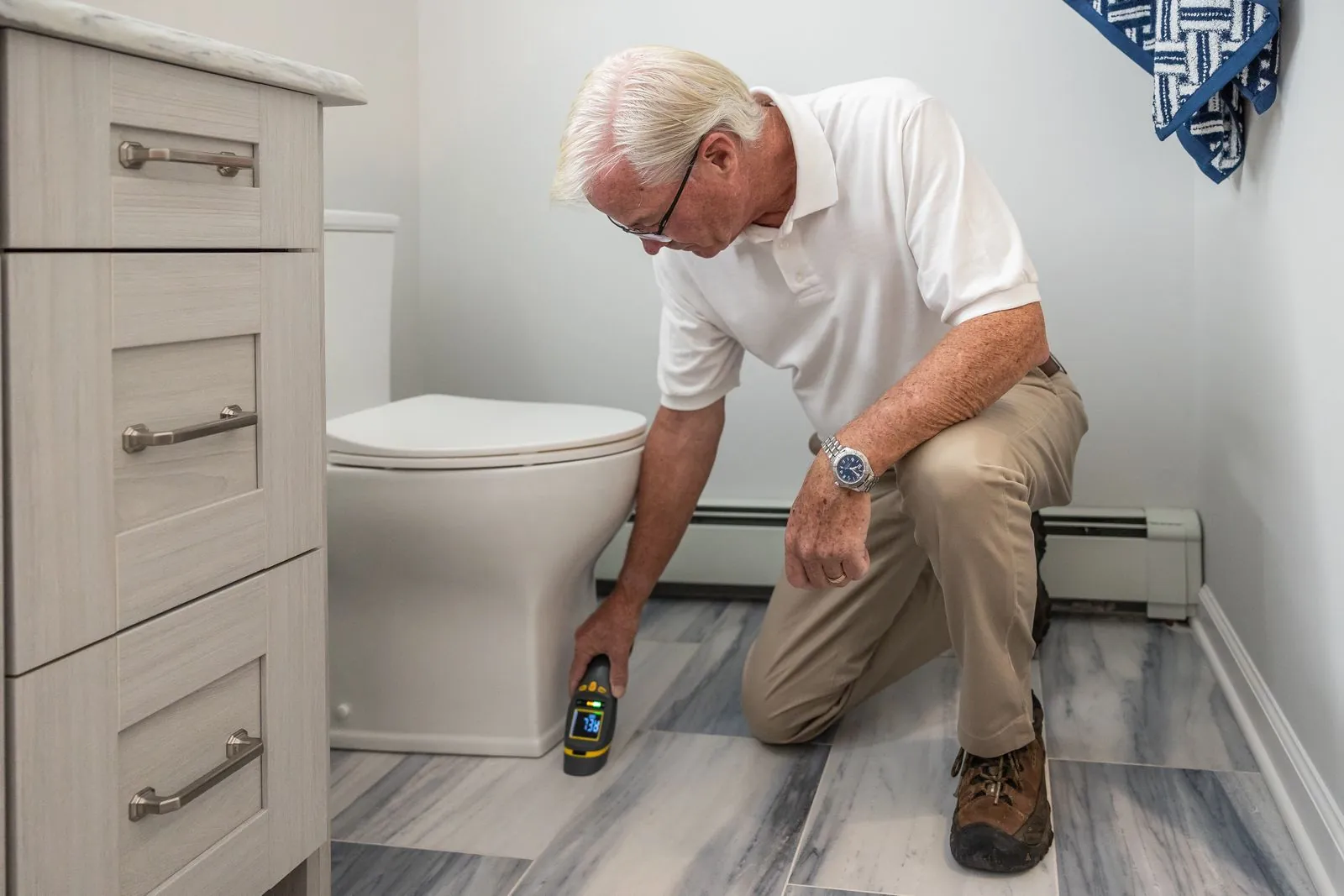
The leak, burst or flood entry is found and shut off first — nothing works while water is still coming in.
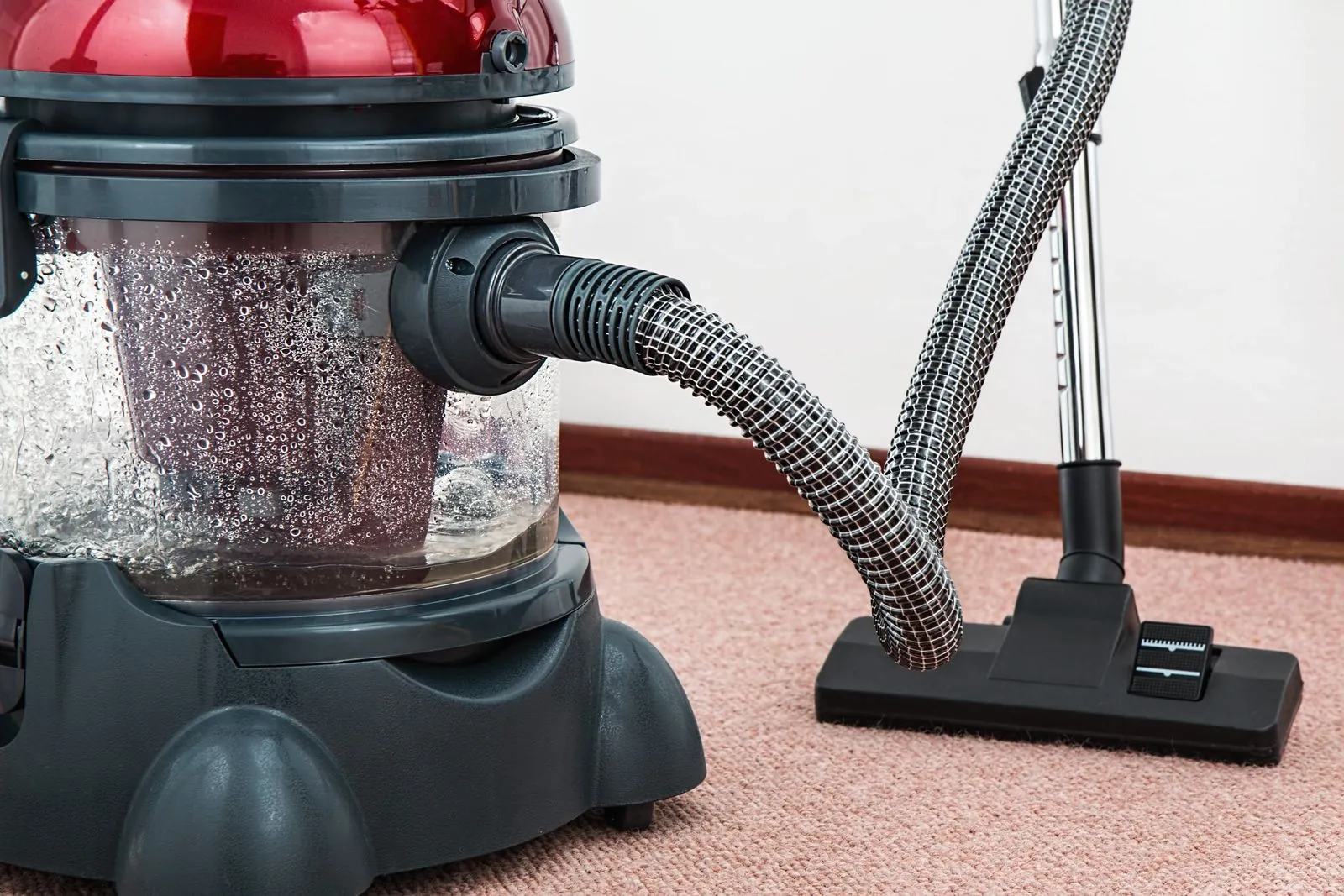
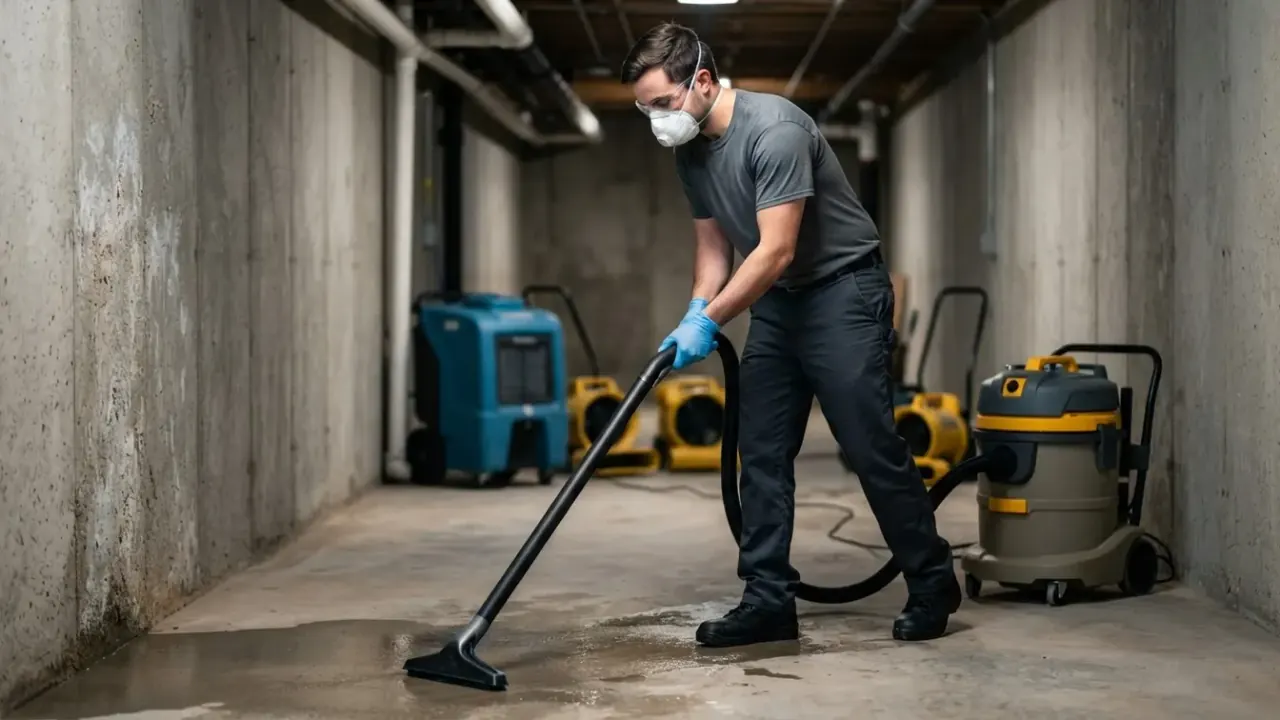
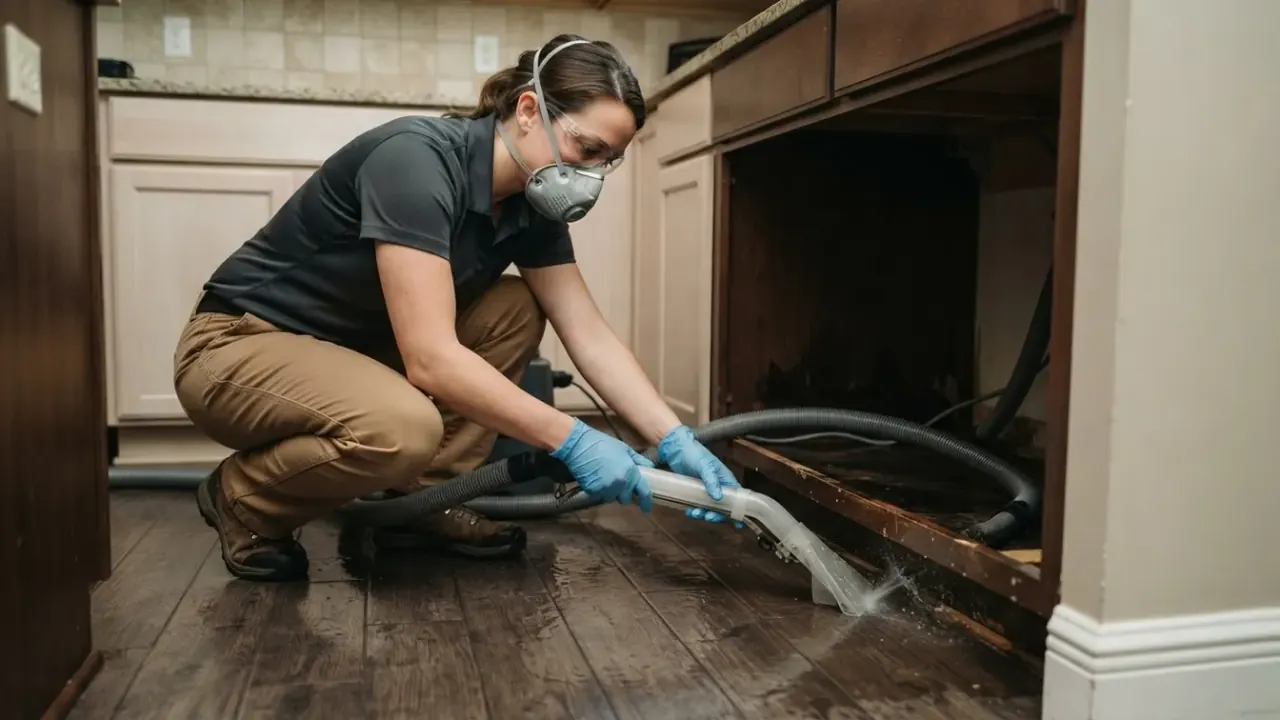
Pumps and vacuums remove standing water from floors, carpets and wall cavities — the water extraction step. The more that comes out now, the less the structure has to dry.
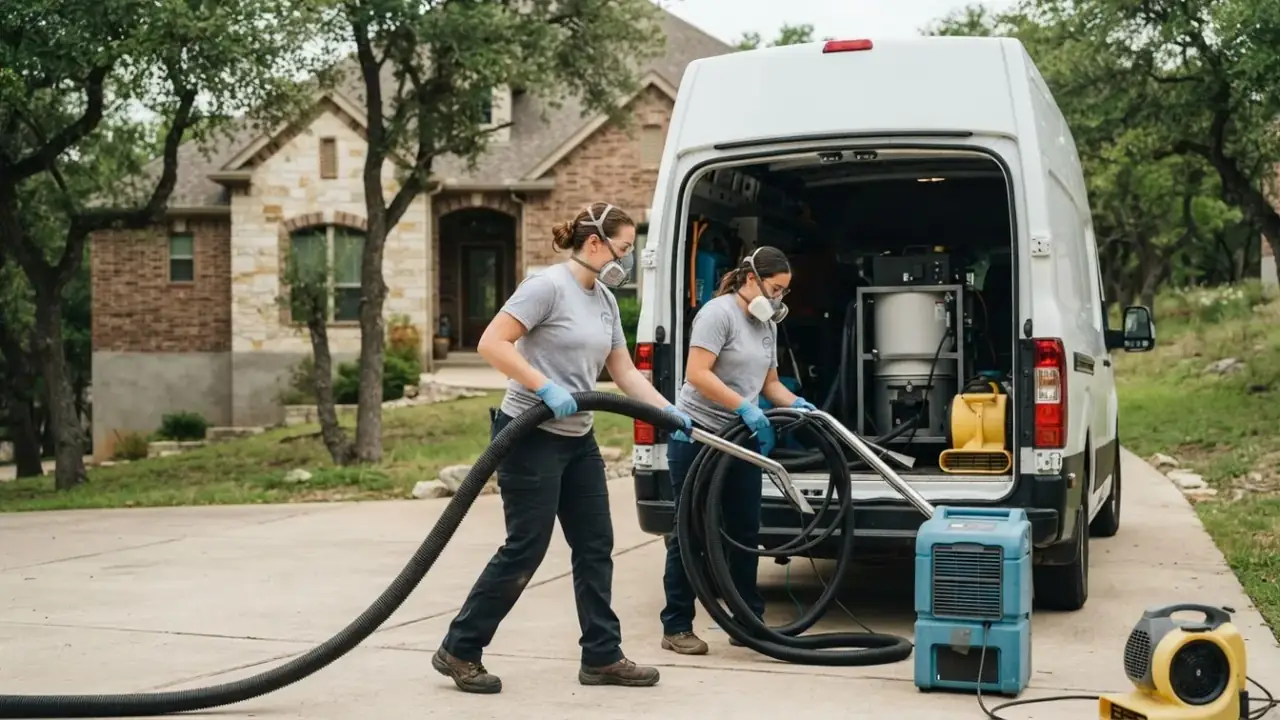
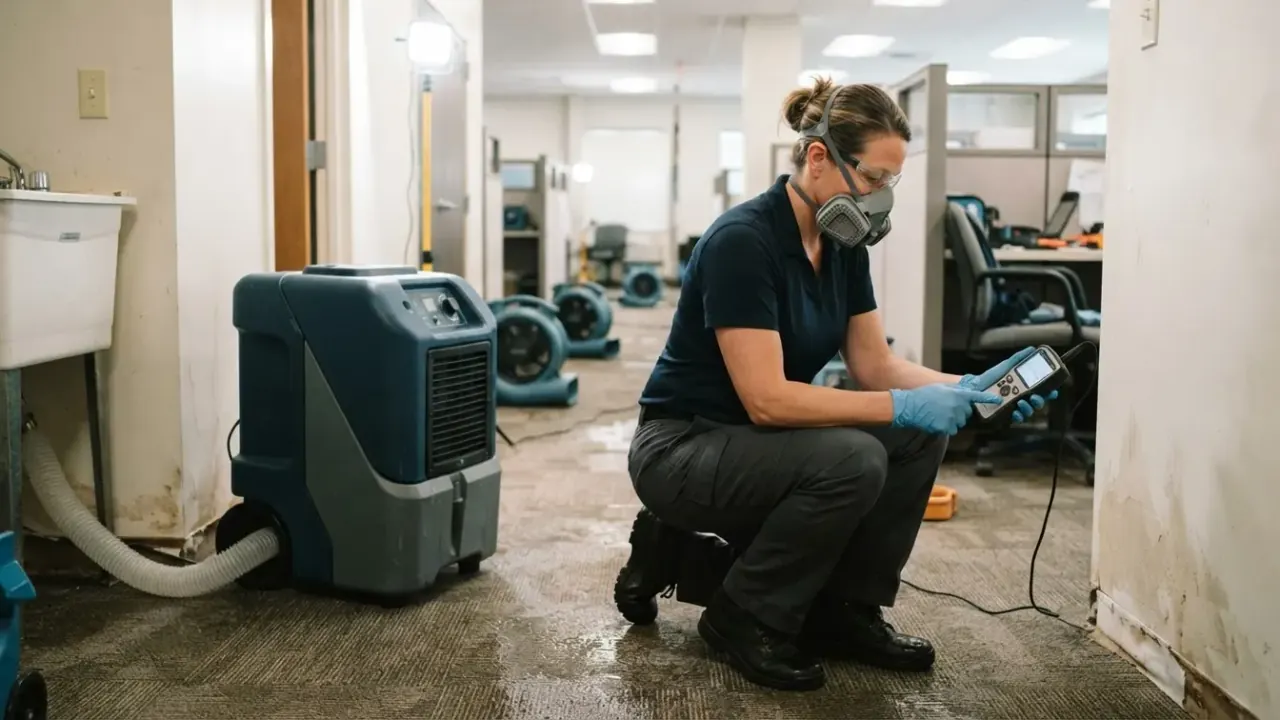
Air movers and dehumidifiers dry walls, floors and framing to verified readings — the structural drying step. Belongings are moved or covered.
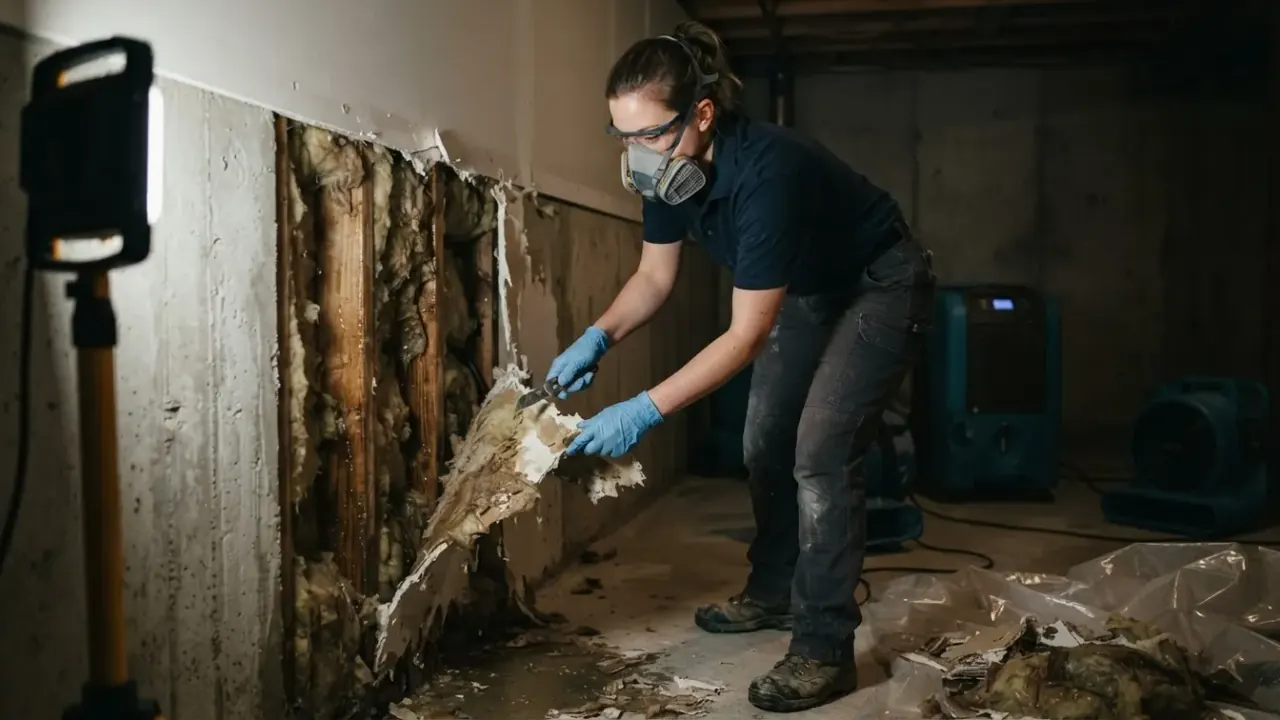
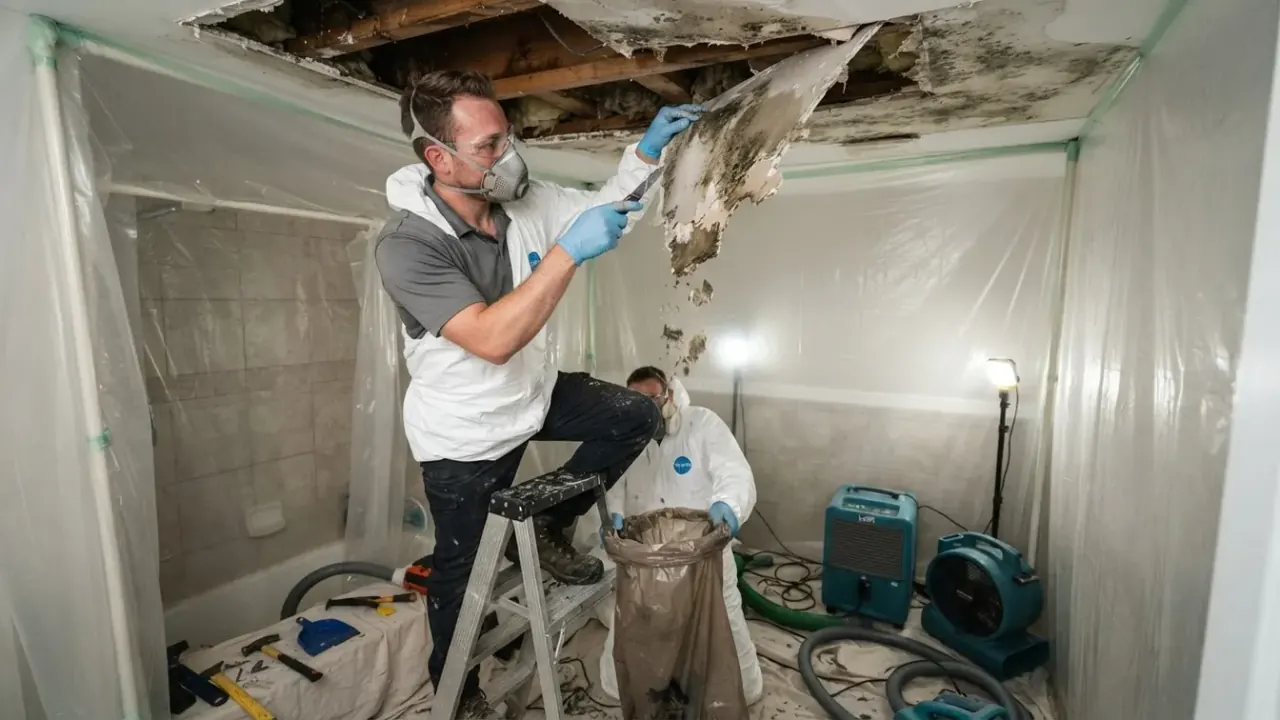
Wet materials that cannot be saved come out; affected surfaces are cleaned and treated. Drying inside 24–48 hours keeps mold from starting.
Most Flagstaff mitigation is residential. The emergency work is the same; what changes is how long the water sat before it was found.
Mitigation limits what the water costs you: the source stopped, the water out, drying under way before damage spreads.
Rentals and empty homes hide water damage longest. Mitigation is documented for owners, managers and insurers.
The first phase of every water damage job — the phase that decides how big the loss gets.
See how it worksWater mitigation is the work done first after water damage is found. Its only job is to limit the loss: stop the source, extract the standing water, dry the structure, protect what can still be saved.
Mitigation does not repair anything. When the structure reads dry and the damage has stopped growing, water damage restoration takes over — cleaning, removing what cannot be saved, and rebuilding. Mitigation is the phase that cannot wait.
Mitigation decides the size of the loss. Restoration decides the size of the repair.
Five steps, in the order that stops a water loss from growing.
The leak, burst or flood entry is found and stopped, and moisture mapping shows how far the water travelled.
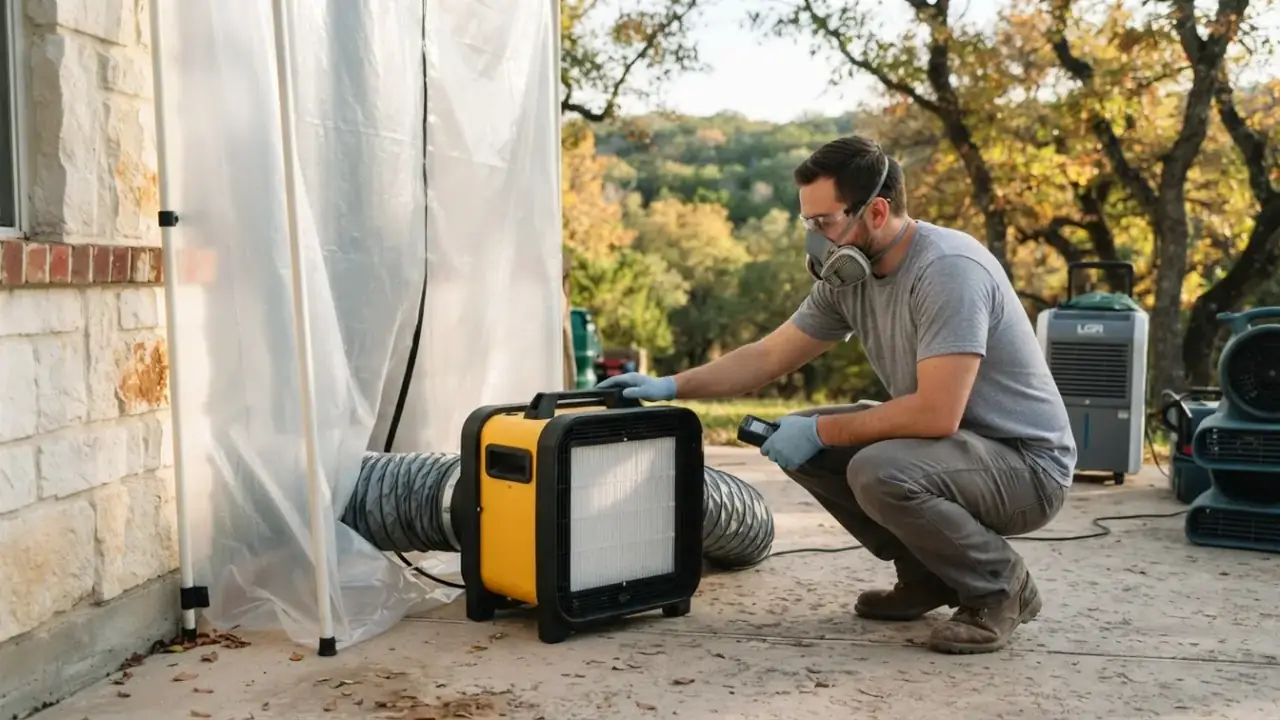
Pumps and extraction vacuums remove standing water — every gallon out is a gallon the structure does not have to dry. See emergency water extraction.
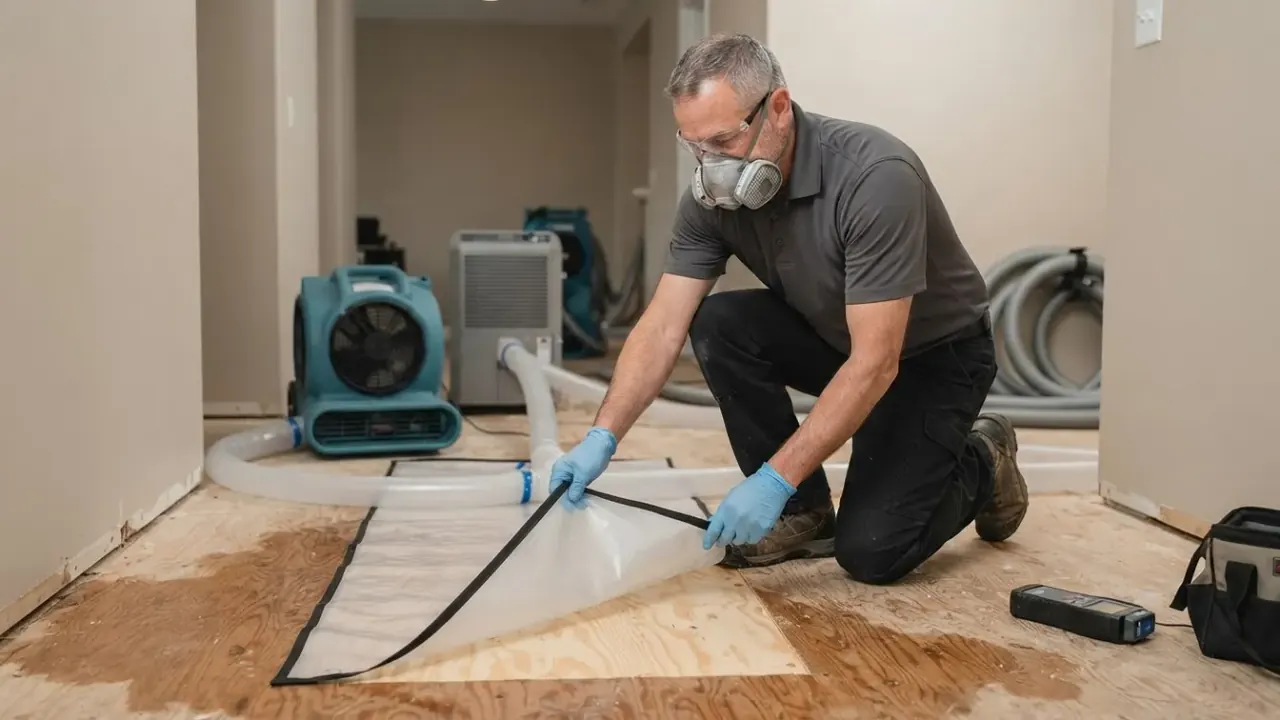
Air movers and dehumidifiers dry walls, floors and framing, checked daily against dry targets — the measured work on our structural drying page.
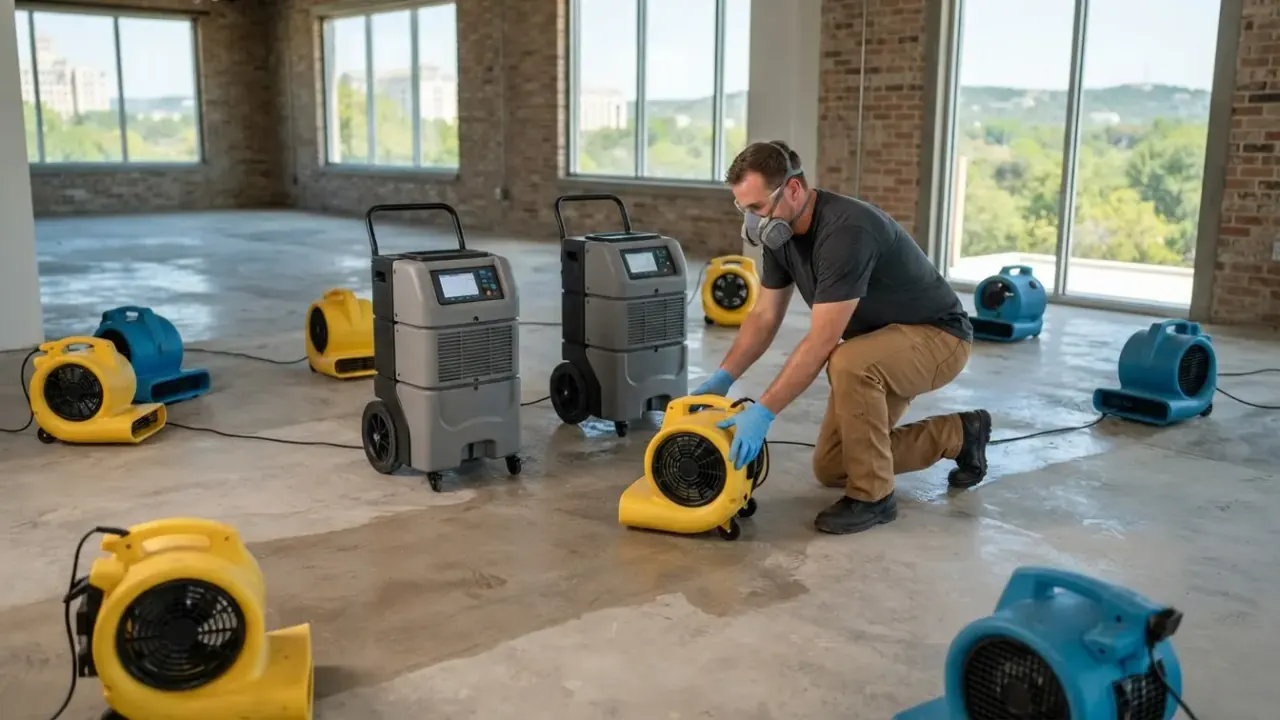
Belongings are moved or covered. Wet materials that cannot dry safely — soaked insulation, ruined drywall — come out now, before they feed mold.
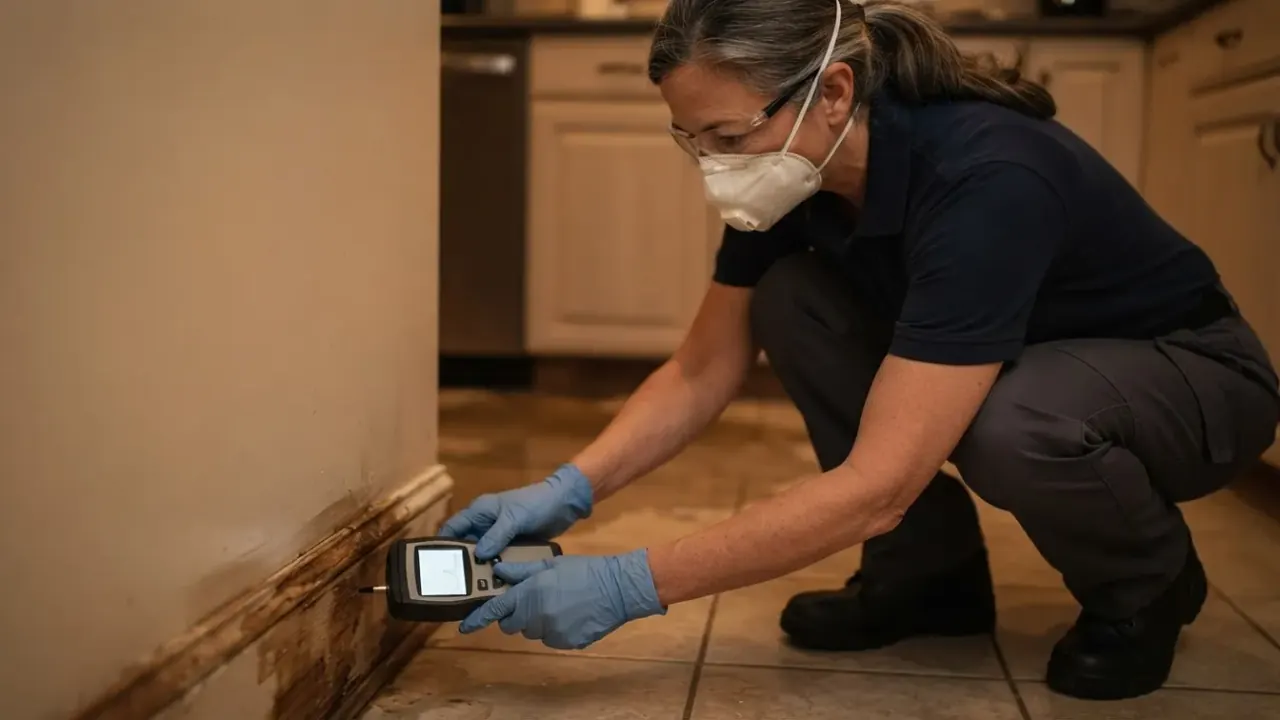
Final readings confirm the structure is dry. The drying log and photo record close the mitigation file and start the restoration scope.
Focus a circle and press Enter for an illustrative thermal view of the photograph.
They remove standing water fast — the step every other step depends on.
They push air across wet surfaces, so moisture leaves walls and floors instead of soaking deeper.
They pull the moisture the air movers release out of the air, so drying keeps moving day after day.
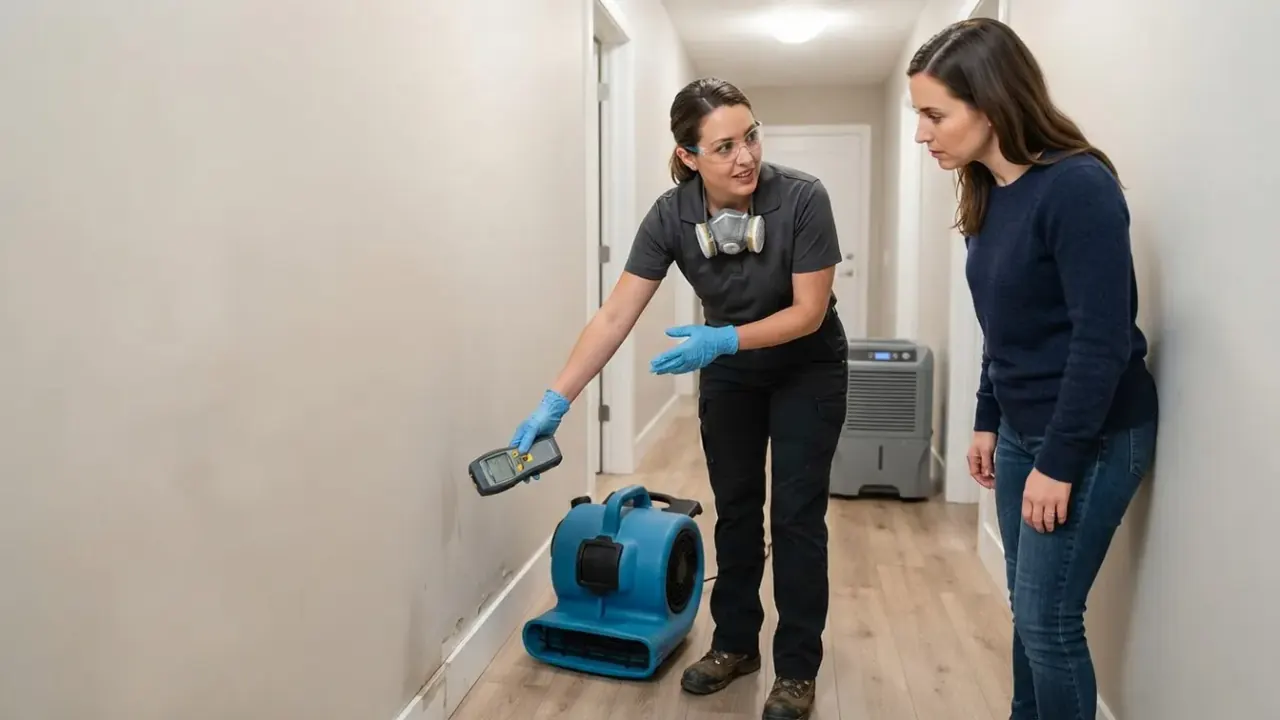
They find hidden water — inside walls, under floors — and prove when it is gone.
Thermal views are illustrative, generated from the photographs.
Equipment is placed from the moisture map, not by habit, and moved as readings change.
The work list is built from the assessment record — photos, readings, removal list — not a walk-through guess.
Restoration never starts over a material until readings say dry — slower by days, cheaper by years.
Flagstaff water arrives on a schedule; mitigation runs against the clock in both seasons. Winter brings frozen and burst pipes at about 7,000 feet. Summer brings monsoon flooding, most dangerous below burn scars — the 2019 Museum Fire scar above Spruce Wash still sheds water into the streets below it.
Covers: Stopping the source, extracting standing water, drying the structure and protecting what can be saved.
Goal: The damage stops growing.
Covers: Cleaning and sanitizing, removing ruined materials, and repairing or rebuilding what was damaged.
Goal: The home returns to its pre-loss condition.
Mitigation always comes first. The full service is on our water damage restoration page.
Water does not wait. These are the costs of days between leak and call.
Every later phase — cleaning, repairs, the insurance file — builds on what mitigation did in the first days.
A stopped source and a drying structure end the loss event — nothing downstream can be planned until then.
Materials dried inside the window stay in the home. That is the difference between drying a floor and replacing it.
Photos, readings and the removal list document the loss from the first visit — the file insurers ask for.
Repairs are scoped from verified readings, because mitigation hands over a measured structure.
What the scope lists before mitigation starts. For how the full job is priced, see our water damage cost guide.
Included
Depends on
Clear records you can keep and share.
The source, the moisture map and the photos from the first visit.
Daily readings for every material, from first check to dry sign-off.
Before, during and after photos — the loss, and the drying.
The verified-dry structure, checked against the mitigation scope, ready for restoration.
The short version of stopping a water loss.
As soon as the water is found — the first hours decide how much of the home is dried, and how much is replaced.
It does not repair or rebuild — it stabilises the loss. Restoration returns the home to pre-loss condition.
When readings verify dry, the job hands over to restoration — cleaning, removal and repairs, scoped from the mitigation record.
These are the Flagstaff ZIP codes we cover. Not listed? Call and ask.
Based in Flagstaff at 2051 E Huntington Dr. These are the areas we serve — call to confirm your street.
Water mitigation is the first phase of a water damage job. It means stopping the water source, extracting standing water, drying the structure, and protecting materials so the damage does not spread or get worse.
It includes stopping the source, extracting standing water, setting drying equipment, removing wet materials that cannot be saved, cleaning and treating affected surfaces, and documenting it all with photos and moisture readings.
Extraction usually happens on the first visit. Drying takes days, not hours — readings are checked daily, and equipment stays until materials verify dry. The timeline depends on how much water there is and how long it sat before it was found.
No. Mitigation is the emergency first phase — it stops the damage from growing. Restoration is everything after: cleaning, removing ruined materials, and repairing or rebuilding the home to its pre-loss condition. See water damage restoration.
Mitigation after a sudden, covered water event — like a burst pipe — is commonly part of a homeowners insurance claim, because it limits the loss. Coverage depends on the cause and your policy. Our insurance claims guide explains sudden vs. gradual damage in Arizona.
What mitigation starts — and what it hands over to.
Call (928) 766-1764. Mitigation starts with stopping the source and getting the water out — sooner means more of the home saved.
Tell us what happened and where the water is. Calling is fastest when water is standing — or send the form and we will take it from there.