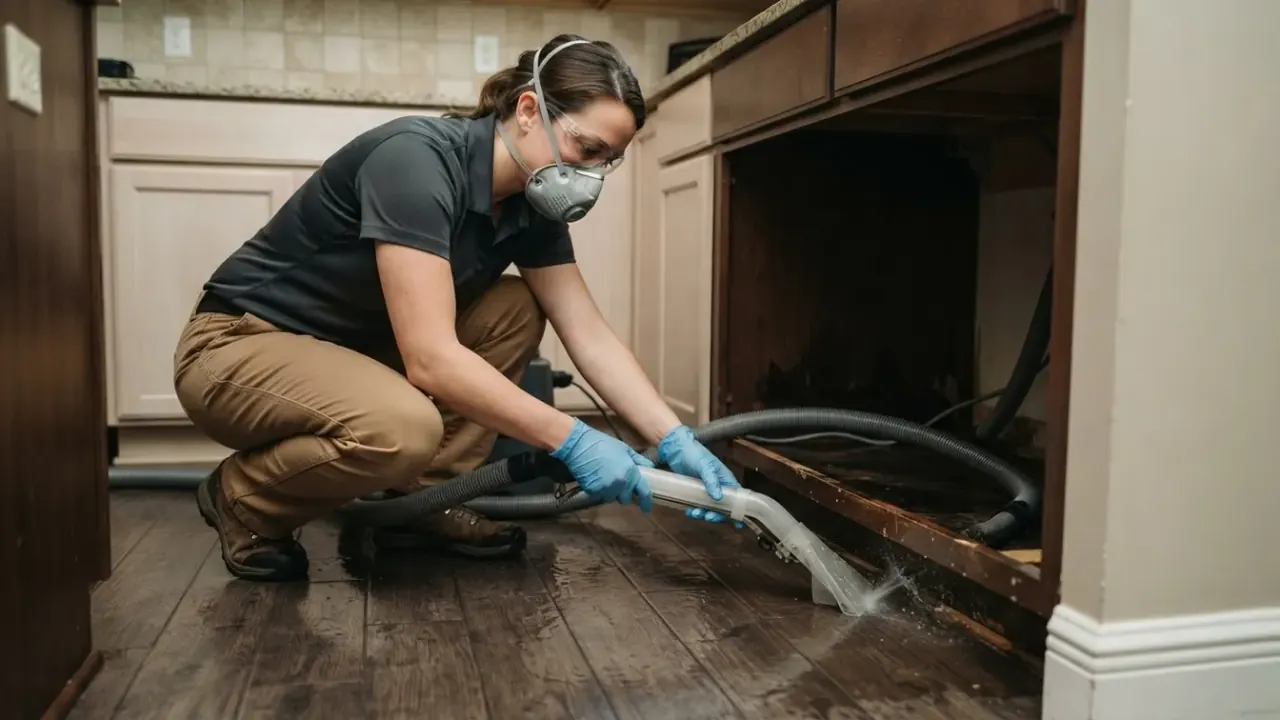
Mold follows moisture. This page explains — plainly — when mold after water damage needs testing, containment and removal, and when drying properly is the whole answer.
Dry-first preventionWhen to testContainment basics
Thorough inspectionsWe check walls, floors and cavities for hidden moisture.
Detailed reportsYou receive a clear summary of what was found and done.
Protective measuresWe take steps to safeguard the rest of your property.
Follow-up checksWe re-check moisture readings before the work is closed out.
What does mold remediation include?
Framed as guidance, because that is the honest starting point: find the moisture, then decide what the mold actually needs.
Moisture source first
Mold is a symptom. We start by finding and fixing the water source — remediation over a live leak does not last.
Assessment of growth
Visible growth is checked by area and material. Small, surface-level patches and large, cavity-wide growth are different jobs with different responses.
Containment where needed
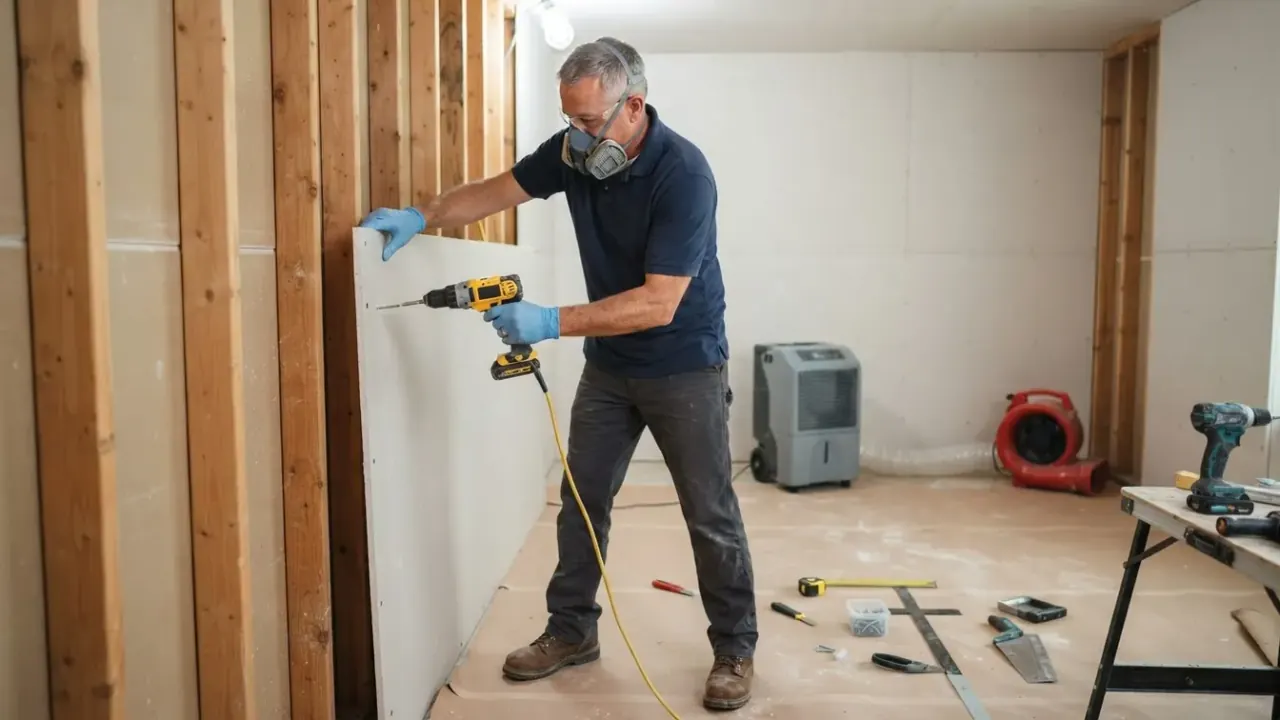
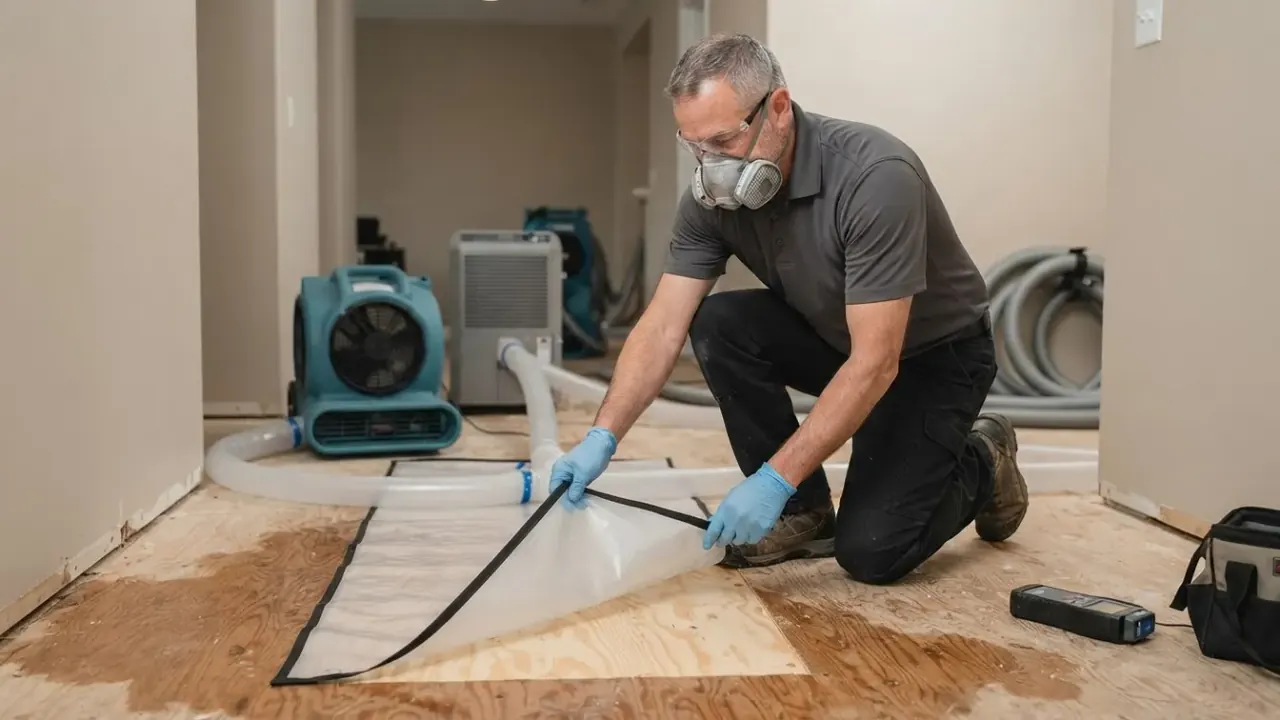
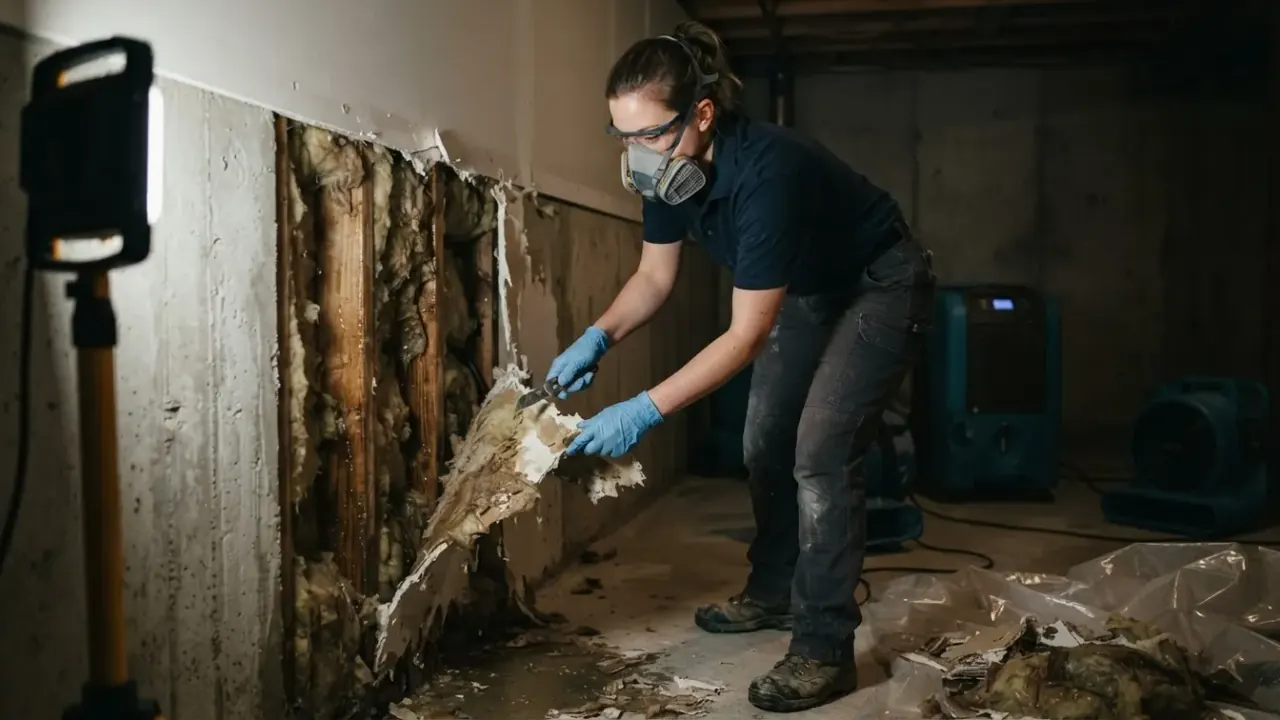
Larger jobs are contained so spores are not spread to clean rooms during removal. Affected material is bagged and removed under containment.
Drying and prevention
The structure is dried to verified readings. Dry materials do not grow mold — this step is what keeps the problem from returning.
Homes, rentals and businesses.
The guidance is the same; health questions, tenants and disclosure duties change the paperwork.
For Homeowners
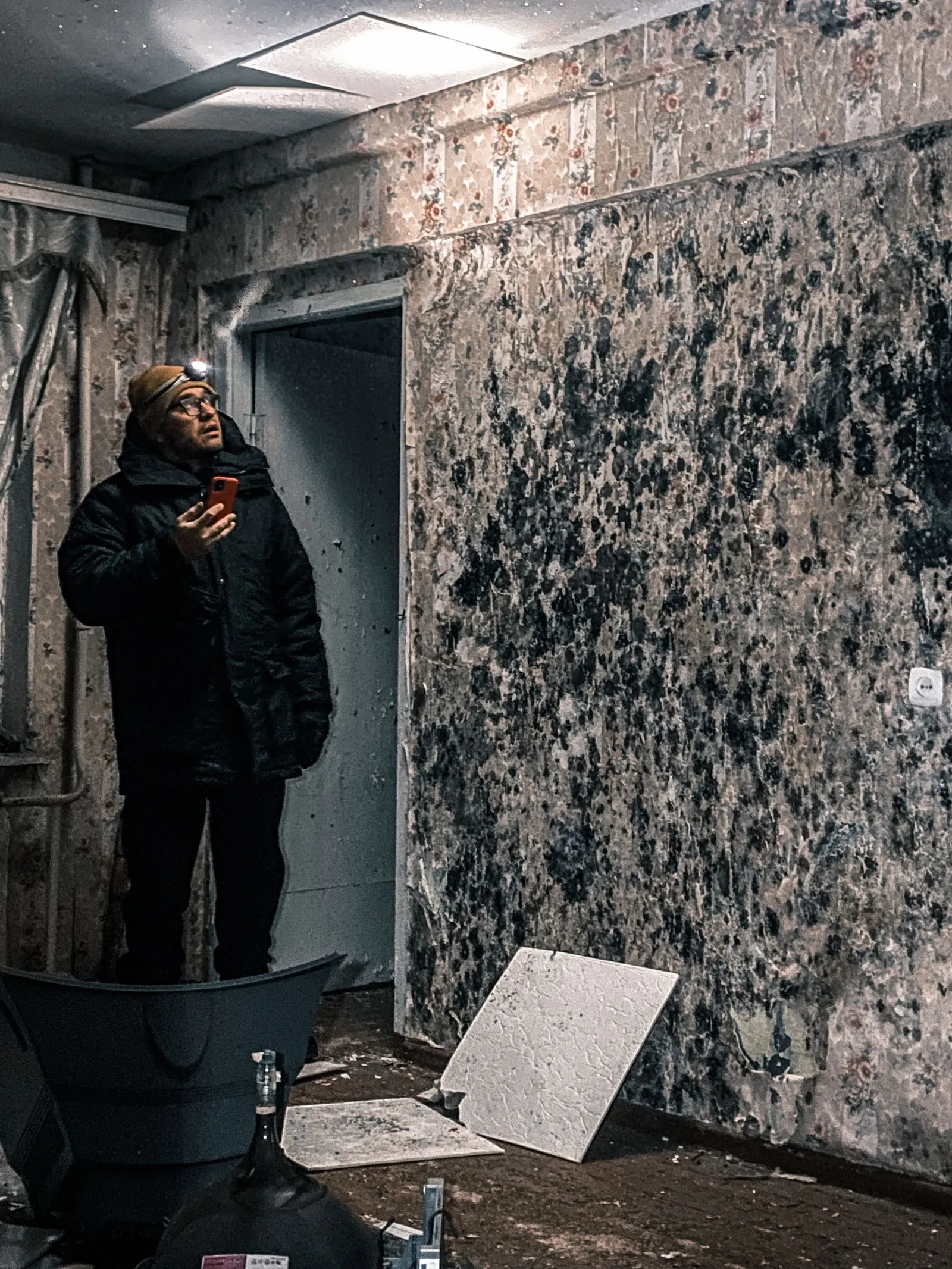
Most home mold follows a known water event — a leak, a burst, a flood. We explain what can be cleaned, what should come out, and what testing would actually tell you.
Mold after a burst pipe or flood
Musty smells in crawlspaces and bathrooms
Growth behind walls after slow leaks
For Landlords and Businesses
Rentals and workplaces carry extra duties to tenants and staff. Documented assessment and containment protect people and the record.
NAU-area rentals with tenant complaints
Offices with musty rooms after roof leaks
Vacation homes found moldy after winter
Mold in Arizona: what is actually regulated?
Arizona has no mold licence. Here is what that means for you as a buyer of this service.
Arizona does not license mold remediation as its own trade — there is no state mold licence for a company to hold. Anyone who claims one should be asked what exactly they mean.
What matters instead: whether the moisture source is fixed, whether containment matches the size of the job, and whether drying is verified with readings. Those are checkable facts. Ask any company — including us — to explain its containment and drying steps in writing.
No licence exists to hide behind in Arizona mold work. Judge the plan: source fixed, containment right-sized, drying verified.
Licence position
Arizona has no state mold-remediation licence. Claims of one are a red flag.
When mold starts
Growth can begin within 24–48 hours on damp materials after water damage.
The real fix
Remove the moisture. Mold on permanently dry material does not keep growing.
How does mold remediation proceed?
The order is always the same: source, assessment, containment, removal, drying.
Find and stop the moisture
The leak, flood source or condensation problem is identified and fixed first. Remediation before this step is wasted work.
Moisture check
Source fix
Readings taken
Assess the growth
Area, materials and likely spread are assessed. Testing is discussed honestly — what it can and cannot tell you.
Visual assessment
Material check
Testing advice
Contain the work area
For larger areas, containment and negative air keep spores out of clean rooms while material is removed.
Containment
Air scrubbing
Protected removal
Remove affected material
Moldy porous material that cannot be cleaned reliably is removed and bagged. Hard surfaces are cleaned in place.
Material removal
Surface cleaning
Bagged disposal
Dry and verify
The structure is dried to target readings. A final check confirms the area is dry and clean before it is closed up.
Drying
Final readings
Prevention notes
What equipment does mold work use?
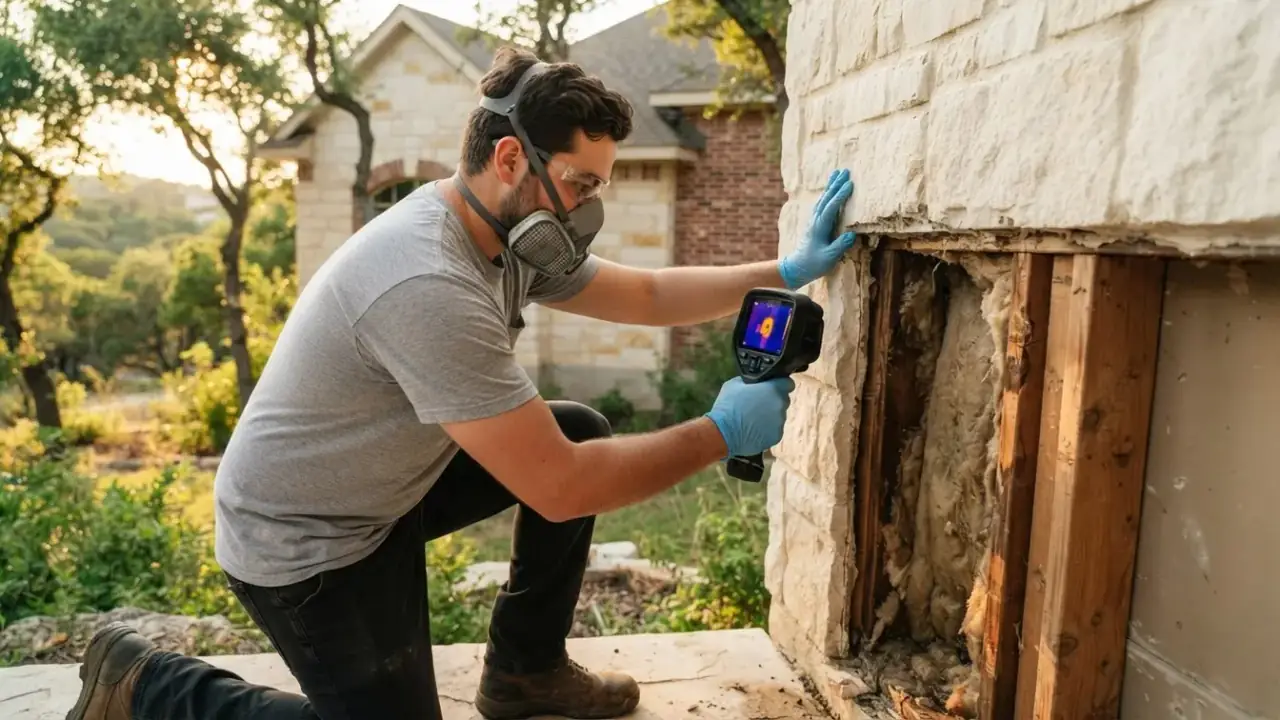
Move across a circle, or focus it and press Enter, for an illustrative thermal view of the photograph.
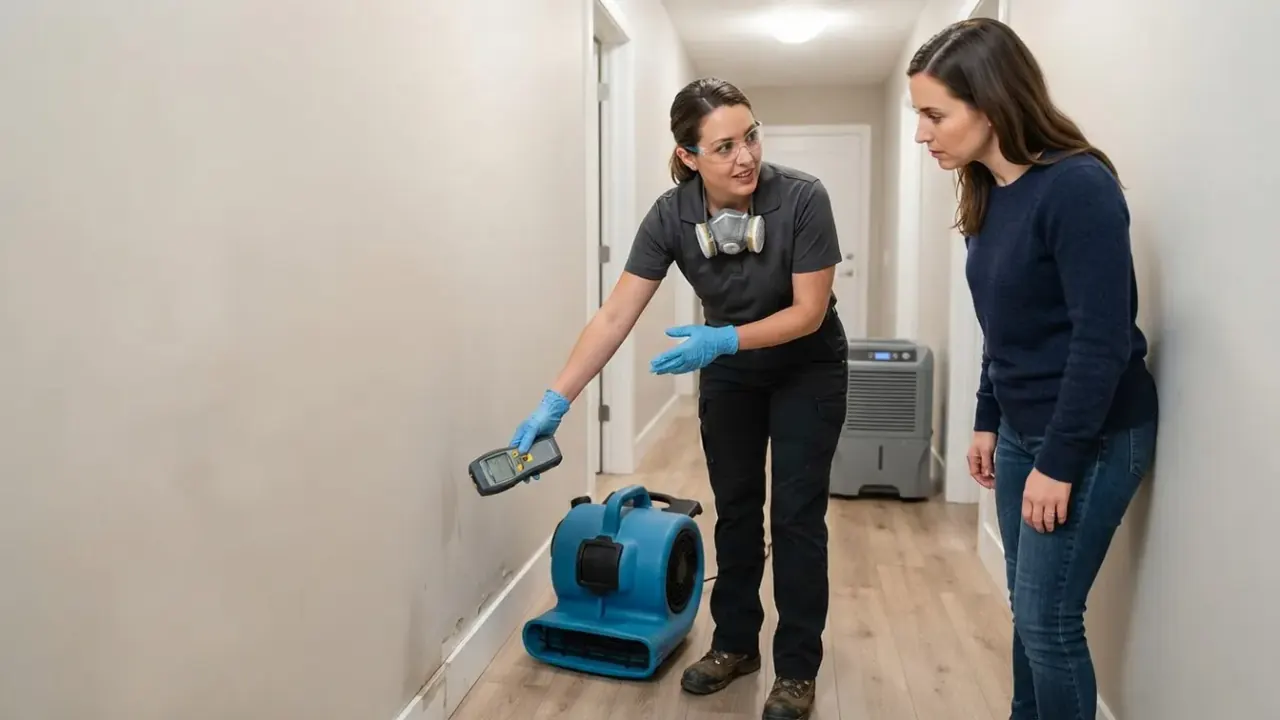
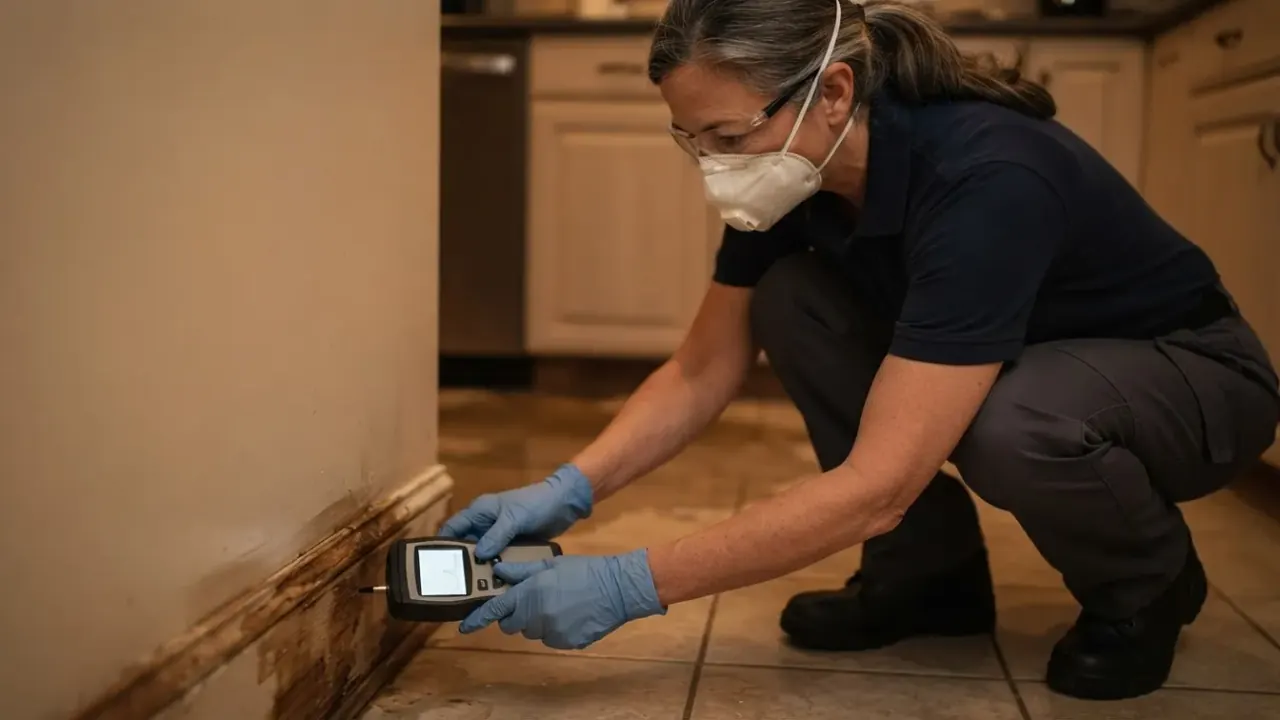
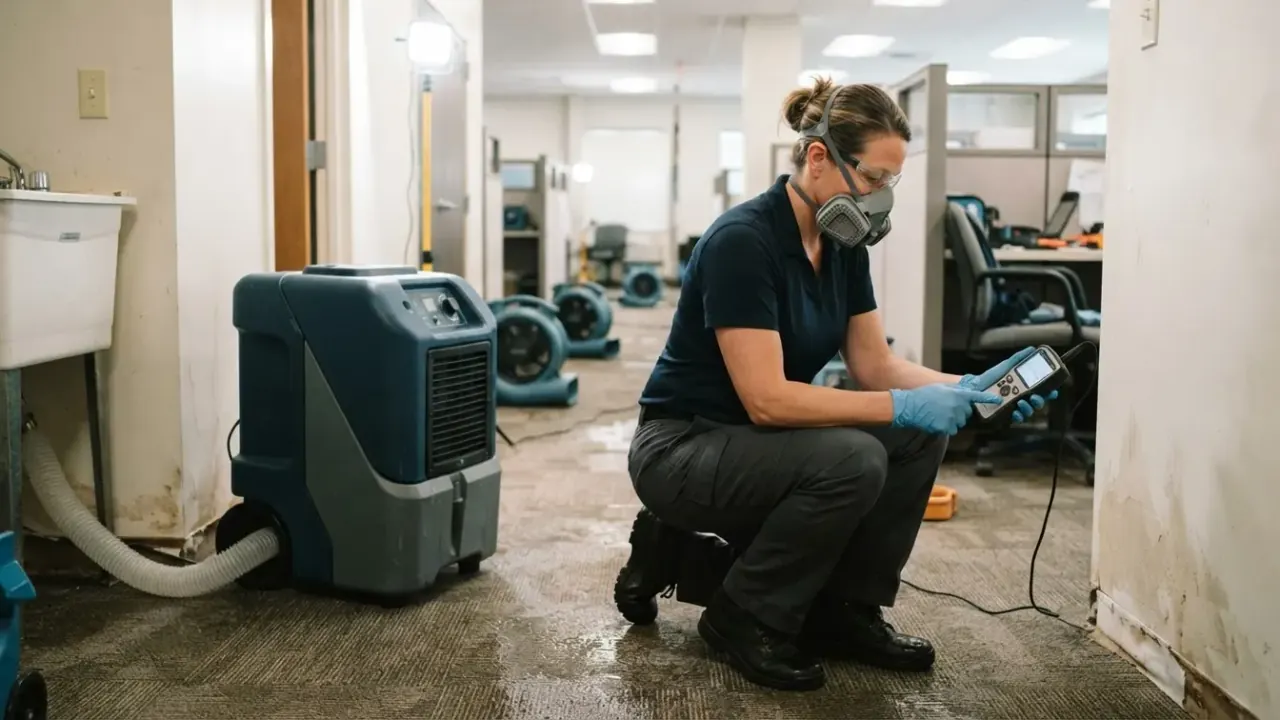
Moisture meters
The most important tool on a mold job. They find the damp material feeding growth — including behind walls.
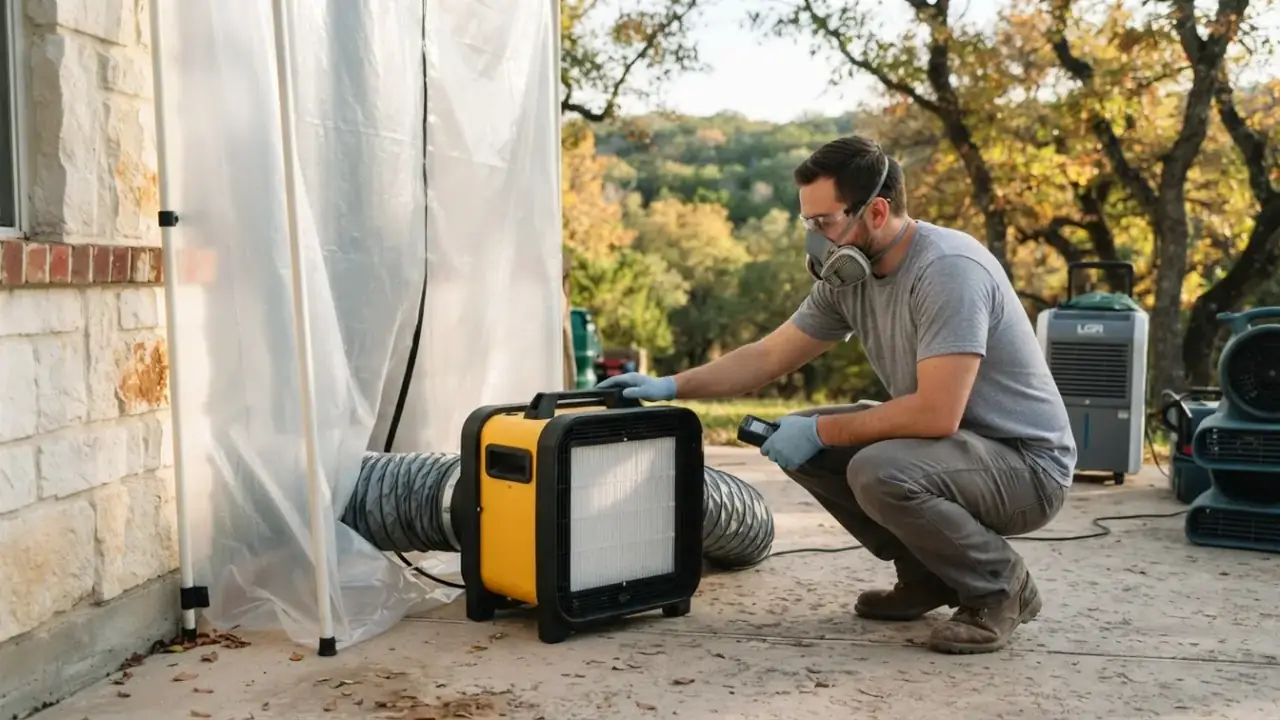
Containment and air scrubbers
Plastic containment and HEPA air scrubbers keep spores contained during removal on larger jobs.
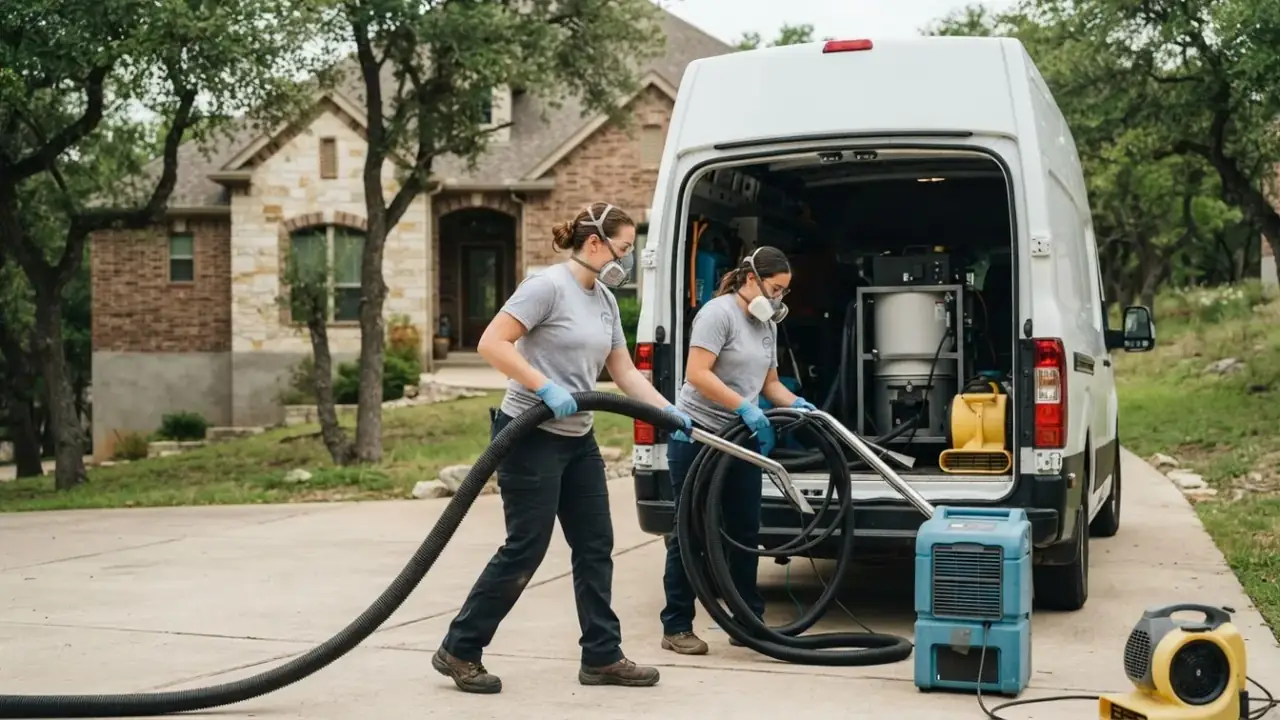
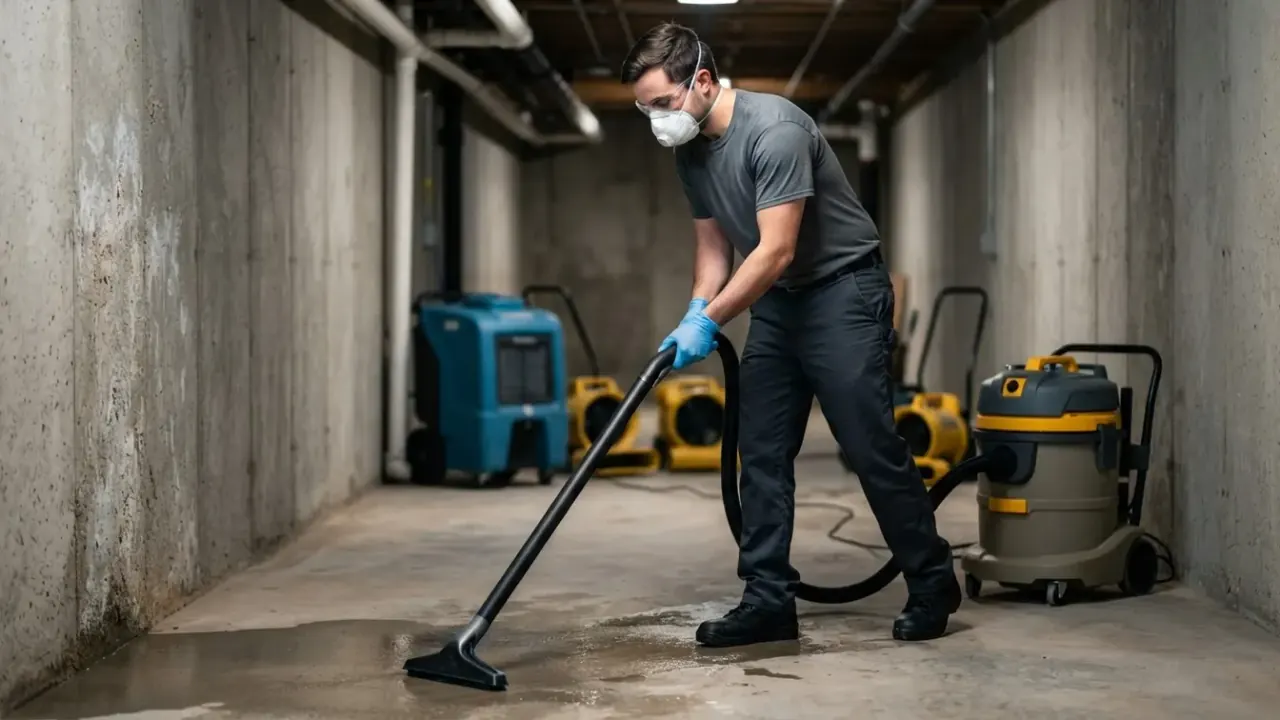
HEPA vacuums
Used on surfaces during and after removal to capture spores and dust instead of spreading them.
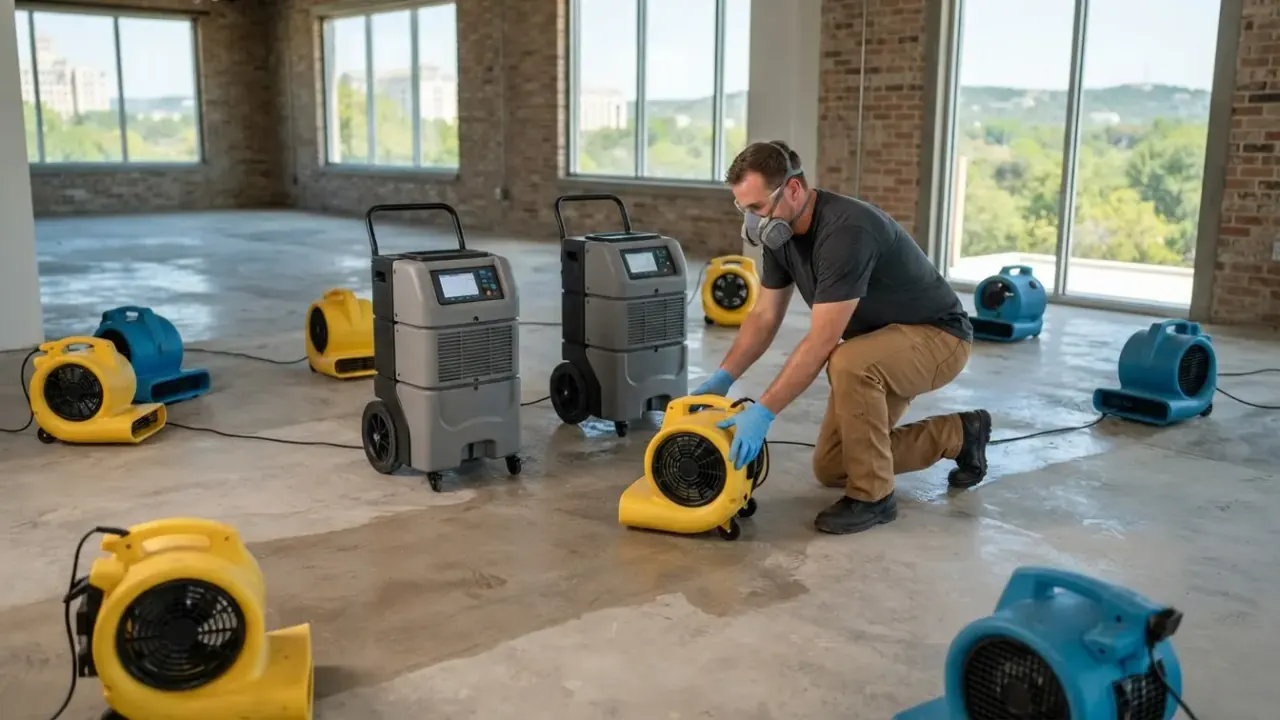
Drying equipment
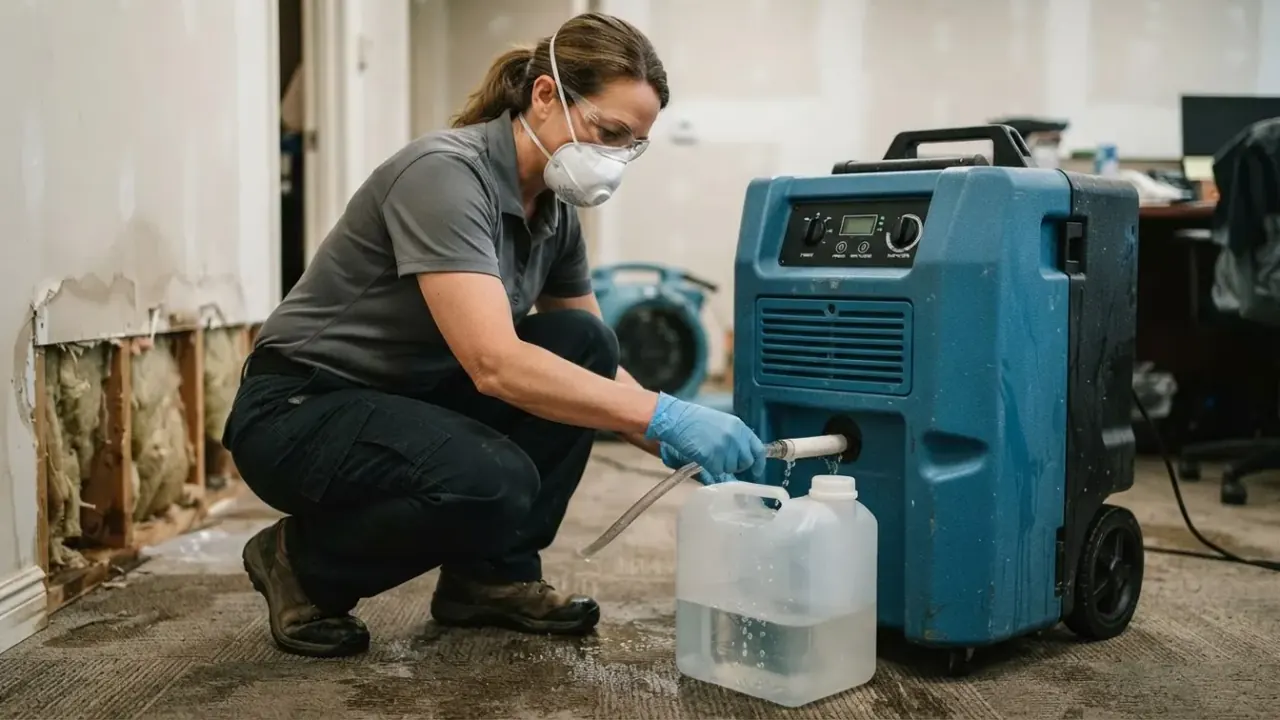
Air movers and dehumidifiers bring materials to dry targets. This is the step that prevents recurrence.
Thermal views are illustrative, generated from the photographs.
Methods
Dry-first prevention
Most mold calls are preventable at the water damage stage. Extraction plus verified drying inside the first days removes the conditions mold needs.
Right-sized containment
A small patch under a sink does not need the containment of a flooded wall cavity. The plan should match the job — in writing.
Testing, honestly explained
Air and surface tests measure what is present; they rarely change the removal decision. Testing helps most for documentation, health investigations and clearance questions.
SouthsideDowntownDoney Park
Mold in Flagstaff homes: where it starts
Flagstaff mold is seasonal. Winter bursts and slow freeze-season leaks wet wall cavities that stay cold and damp; monsoon flooding soaks lower drywall and insulation; vacant winter homes give growth weeks of undisturbed time. The pattern to learn is simple: any Flagstaff water event that is not dried within days is a mold candidate.
Southside: Older homes near downtown; slow plumbing leaks behind walls are the common mold source.
Downtown: Early-1900s stock with layered renovations — cavities and old insulation hide damp well.
Doney Park: Wells, outbuildings and freeze-season pipe breaks; mold found when owners return in spring.
Vacant homes: A winter leak in an empty home is the highest-risk pattern — check homes after freezes and thaws.
Bathrooms and crawlspaces: Chronic humidity and poor ventilation grow mold without any single flood event.
Containment and removal are sized to the actual area.
Drying readings close the job — dry is what keeps it closed.
Surface mold vs. hidden mold
IllustrativeThe thermal view is generated from the photograph. It is not a measurement. Drag the handle, or use the arrow keys once it is focused.
Surface mold
What you see: Spots on grout, paint or caulk in damp rooms.
What it means: Usually a local humidity problem on a cleanable surface.
Cleaning plus fixing ventilation or the small leak often ends it.
Mold after water damage
What you see: Growth on drywall, baseboards or flooring near a past leak or flood.
What it means: Material soaked and stayed wet; growth may run inside the wall.
Assessment decides cleaning vs. removal — and drying the cavity either way.
Musty smell, nothing visible
What you see: A persistent earthy smell, especially in one room or a crawlspace.
What it means: Hidden damp is likely — behind a wall, under a floor, in a crawlspace.
Moisture meters, not guesswork, locate the source before any wall is opened.
What problems does mold cause?
Mold is a moisture report written on your walls. The problems are the damp, the damage and the delay.
Health complaintsMusty air and irritationMold exposure can irritate airways and aggravate allergies and asthma for sensitive people. The fix is removing growth and its moisture source — health questions beyond that belong to your clinician.
Material damageGrowth digests what it sits onMold feeds on paper-faced drywall, wood and dust in cavities. Long growth means more material removed.
Spread during bad removalUncontained work makes it worseCutting moldy drywall without containment spreads spores through the home. Right-sized containment is not upselling; it is the job.
Why guidance-first mold help?
Because the honest answer is sometimes 'dry it properly and you are done' — and sometimes 'this needs contained removal.' You deserve the assessment before the invoice.
No licence theatre
Arizona has no mold licence, so we do not claim one. You judge us on the plan, the containment and the readings.
Moisture fixed, not masked
Painting over or fogging mold without fixing moisture guarantees a return visit. We start at the source.
Testing advice without the upsell
We will tell you when a test adds information and when it would only repeat what the assessment already shows.
Prevention built in
Every job ends with verified drying and notes on the ventilation or leak fix that keeps mold from coming back.
What a written scope covers.
What a written mold scope covers and what shapes it. For how restoration costs are built, see our water damage cost guide.
Based in Flagstaff at 2051 E Huntington Dr, covering neighborhoods across the city. These are areas we serve — call to confirm your street.
Sunnyside
Mount Elden Estates
Downtown
Southside
Doney Park
Kachina Village
Mountainaire
Fort Valley
Frequently Asked Questions
No. Arizona does not issue a mold-remediation licence, so no company can honestly claim to hold one. What you can check instead: how the company finds and fixes the moisture source, how it contains the work area, and whether it verifies drying with meter readings.
Testing is most useful for documentation — a rental dispute, a real-estate transaction, or a health investigation guided by a clinician. For a typical post-leak patch, a visual and moisture assessment usually answers the practical question: what comes out, what gets cleaned, and how it gets dried.
Yes — prevention is mostly speed and drying. Remove standing water promptly and dry materials to verified readings; growth can begin within 24–48 hours on material that stays damp. Fix the source, ventilate bathrooms and crawlspaces, and check vacant homes after freezes.
Tell us what happened and where the water is. Calling is fastest when water is standing — reach us at (928) 766-1764, or send the form and we will take it from there.