Sudden & accidental
A burst frozen pipe. A water heater that lets go. A supply line that splits.
- Generally the covered pattern
- Document the cause and the timing
- The failed part itself is often excluded
The general rule: standard homeowners policies are built for sudden, accidental water — a burst pipe, a failed water heater. They are not built for gradual leaks, and they do not cover rising flood water at all. This guide explains the lines, Flagstaff's burn-scar flood risk, and the records that help a claim. General information only — not advice about your policy.
 General information, not adviceFlood cover is separateDocument before cleanup
Sometimes — and the deciding question is how the water got there.
See the documentation stepsA pipe that bursts on a January night in Flagstaff is a sudden, accidental discharge. That is the kind of event standard homeowners policies are built around.
A supply line that seeped behind a wall for three months is gradual damage. Insurers generally treat that as wear and maintenance — a different answer.
One more line matters: repairing the failed part itself, and the damage it caused, are often treated separately. The resulting damage is the claim; the worn-out part is usually the homeowner's.
Water damage and freezing are among the most common homeowners insurance claims nationally.
That is one reason carriers ask for thorough documentation on every water loss.
None of this decides your claim. Your policy wording, your deductible, and the documented cause decide it. Read this page as a map of the questions, not as an answer for your house.
Insurers sort water losses by source before anything else. Knowing which kind you have tells you which conversation to have.
A burst frozen pipe. A water heater that lets go. A supply line that splits.
A slow drip under a sink. Seepage from a worn fitting, month after month.
Rising water from outside — monsoon runoff, a swollen wash, burn-scar flow.
Whatever the coverage answer, the claim runs on records. These six steps build them.
Rooms, walls, floors, and the source — before anything is moved or dried. Video with a date stamp helps too.
When you found it. When it likely started. What you did first. Adjusters work from timelines.
Shut off the water if you safely can. Move what you can out of the wet area. Policies expect reasonable steps to limit the loss.
Emergency work, equipment, temporary repairs, and any nights you cannot stay in the home. Keep the paper.
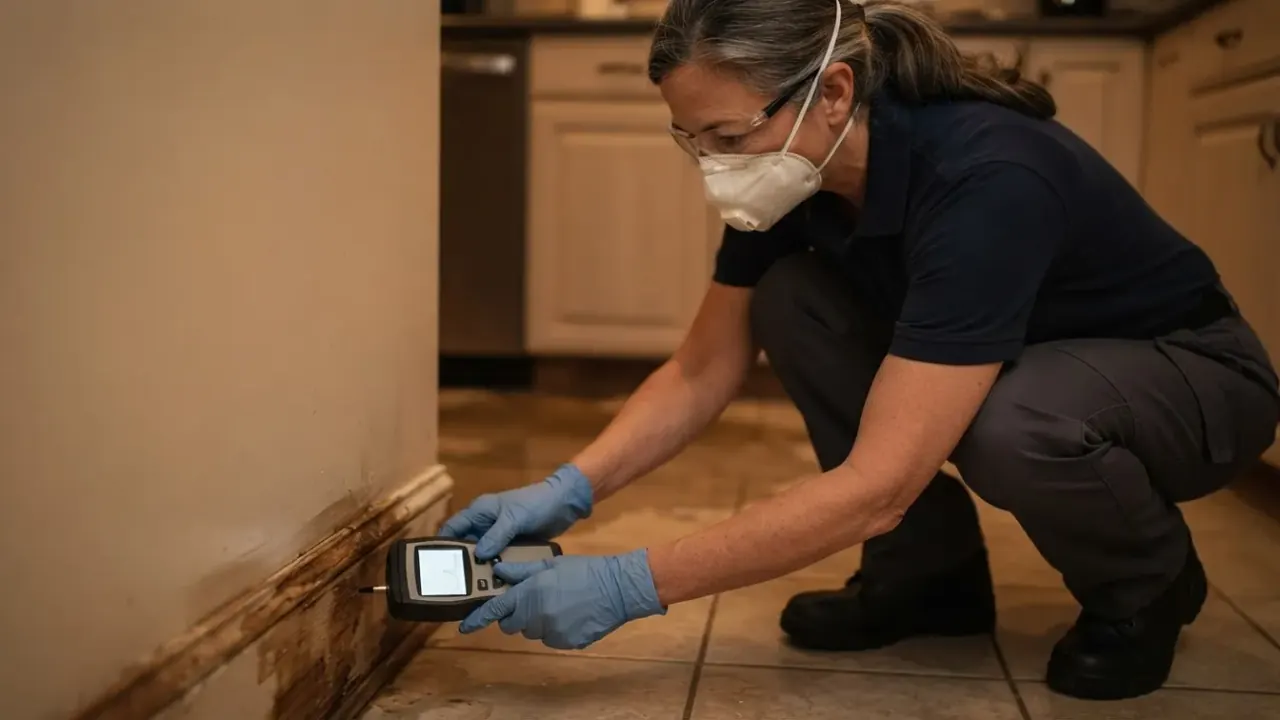
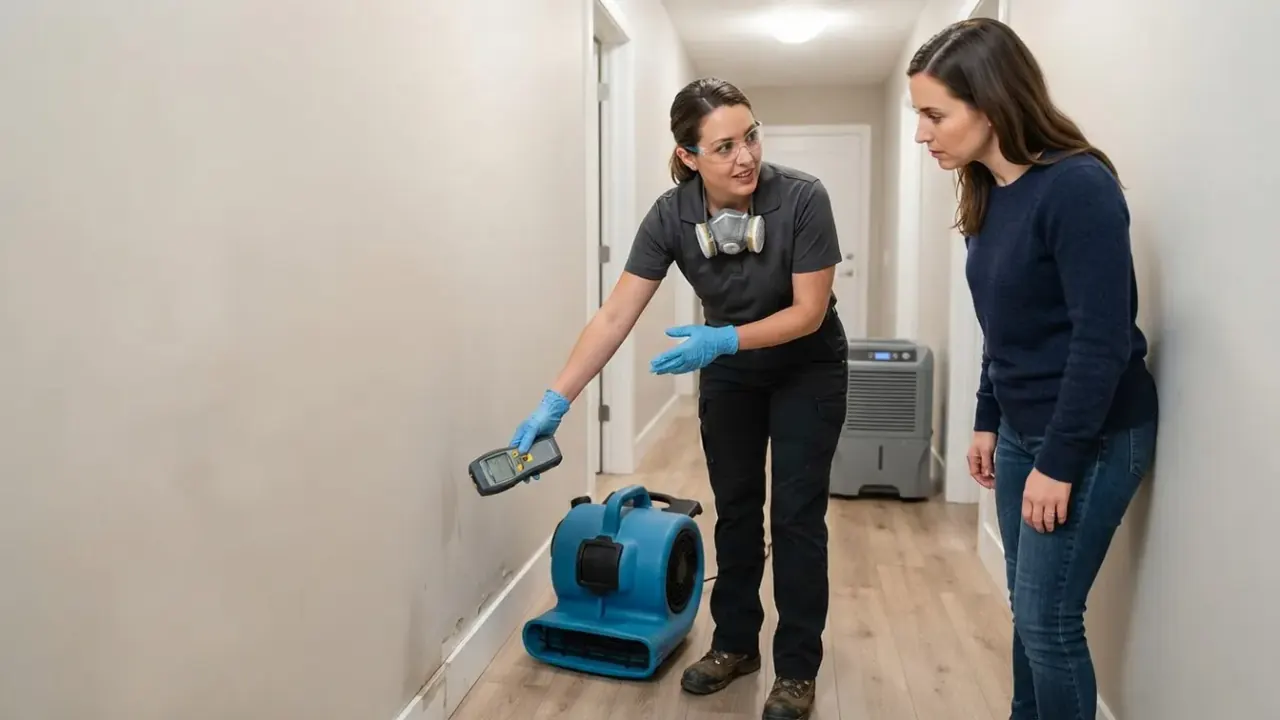
Moisture readings and drying logs from the restoration work show the loss was dried to a standard — not just aired out.
Ask what they need from you, and what they need from the restoration company, while the records are fresh.
Flagstaff's clearest insurance lesson is written in one watershed: Spruce Wash.
See flood cleanupThe Museum Fire burned 1,961 acres in the Spruce Wash area in 2019, above Mount Elden and Sunnyside.
Burned soil sheds water instead of absorbing it. In the 2021 monsoon season, that runoff flooded Mount Elden Estates, Grandview, Linda Vista, Paradise Way, and Sunnyside.
Proposition 441, approved in November 2022, put $26 million into Spruce Wash stormwater works. The risk is reduced, not retired — burn-scar flooding can persist for years after a fire.
Here is the insurance point: that water arrives as flood. Standard homeowners policies do not cover rising flood water, however it was caused.
If your home sits below the scar, flood insurance is a separate decision — through the NFIP or a private insurer — and NFIP policies carry a 30-day waiting period before cover takes effect.
Buying it during monsoon season is buying it late. The time to review flood cover is before June 15, when Arizona's monsoon season opens.
Seven questions that turn a first call into a clear next step. Ask them early, and write down the answers.
One note on living expenses: where a covered loss makes a home uninhabitable, policies commonly include additional living expense cover for the extra costs of living elsewhere. The limit is set by your own policy. Receipts decide what is reimbursed — keep them all.
It depends on how the leak happened. A sudden, accidental event — a pipe that bursts, a water heater that fails — is the kind of discharge standard homeowners policies are built around. A leak that seeped gradually over weeks or months is generally treated as a maintenance issue instead. Your policy wording decides. This is general information, not advice about your coverage.
No. Flood damage is excluded under standard homeowners and renters insurance policies. Cover for rising flood water is a separate policy, bought through the National Flood Insurance Program (NFIP) or a private insurer. NFIP policies have a 30-day waiting period before coverage takes effect.
Stop the water if you safely can, and limit further damage. Photograph everything before cleanup. Note dates and times. Keep receipts for any emergency work. Then notify your insurer and ask what documentation they need.
Homes below the Museum Fire scar — in Mount Elden Estates, Grandview, Linda Vista, Paradise Way, and Sunnyside — flooded in the 2021 monsoon season. That water is flood water, not a plumbing discharge. Without a separate flood policy, it is generally not covered by a standard homeowners policy.
Photos and video from before cleanup, a timeline of when the damage was found, moisture readings and drying logs from the restoration work, the written scope, and receipts. Carriers expect documented proof of the loss and of the drying — not just a final bill.
Pair this guide with the cost guide before you compare any numbers.
Call and describe the loss. Documented extraction and drying records are built into how the work is done.
Call first if water is still spreading. Or send the form and tell us what happened, where the water is, and when you found it.