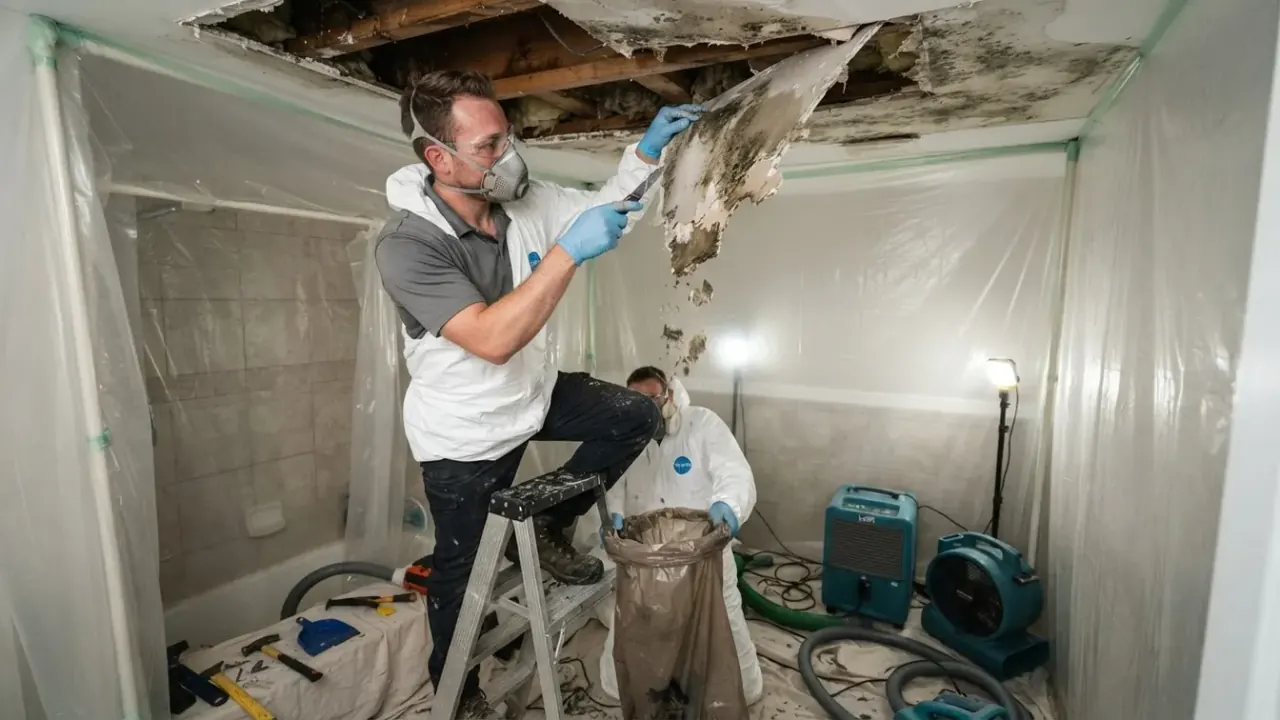
Water damage restoration in Flagstaff means taking a wet home all the way back to its pre-loss condition: stop the source, extract the water, dry the structure to verified readings, clean what was affected, and repair what was ruined. At about 7,000 feet, the causes are local — burst pipes in the freeze, monsoon flooding in the summer.
Source stopped firstMeasured dryingRestored to pre-loss
One team, start to finishExtraction, drying, cleaning and repairs under one written scope.
Moisture-mapped assessmentMeters show where the water travelled before any work is scoped.
Written scope firstYou see the work list and the reasons before restoration starts.
Documented dryingReadings are logged until every material reads dry.
What does water damage restoration include?
Everything it takes to return a water-damaged Flagstaff home to its pre-loss condition — the condition it was in before the water. One service, four parts.
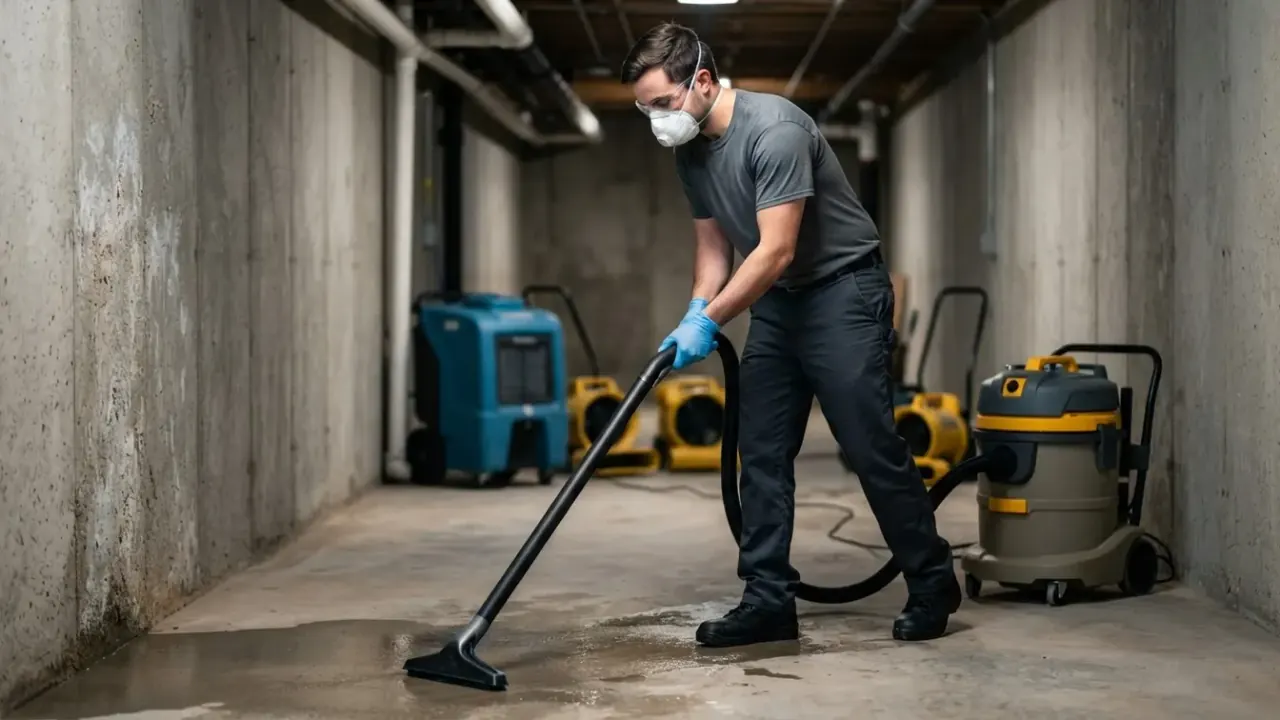
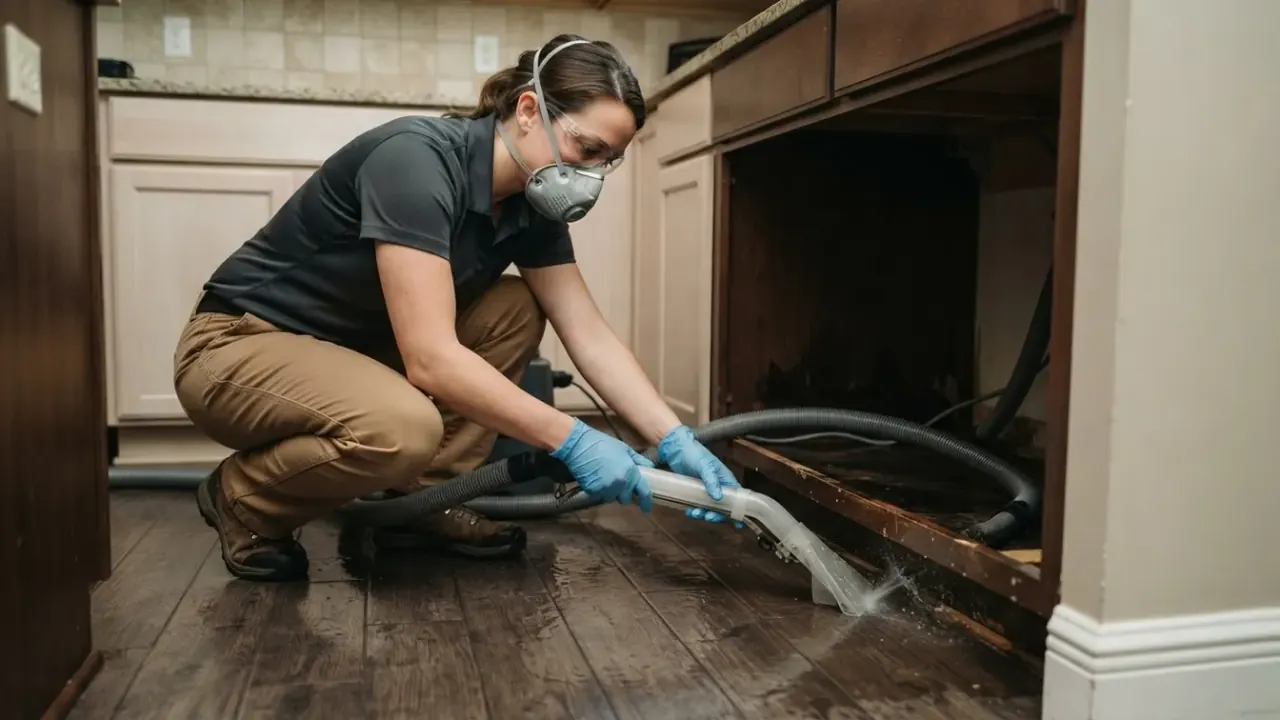
Water removal & extraction
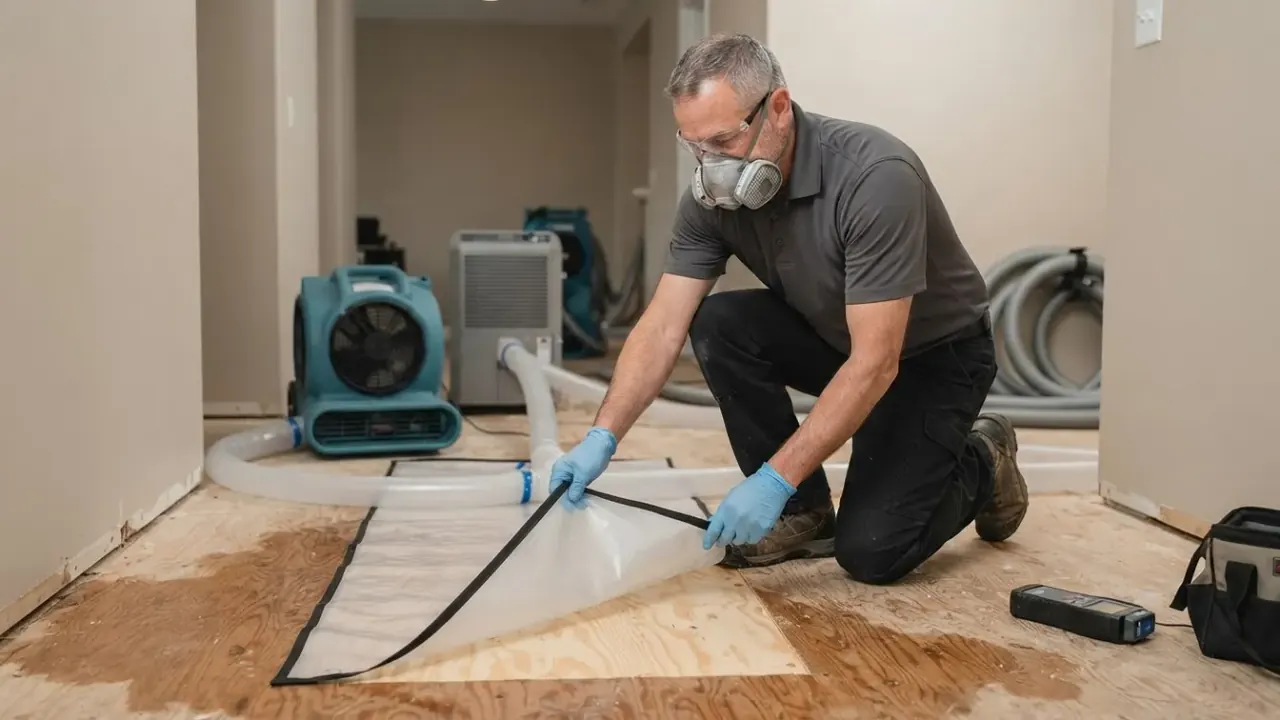
Standing water is pumped and vacuumed out first. Every hour it sits, it travels further into floors, walls and insulation.
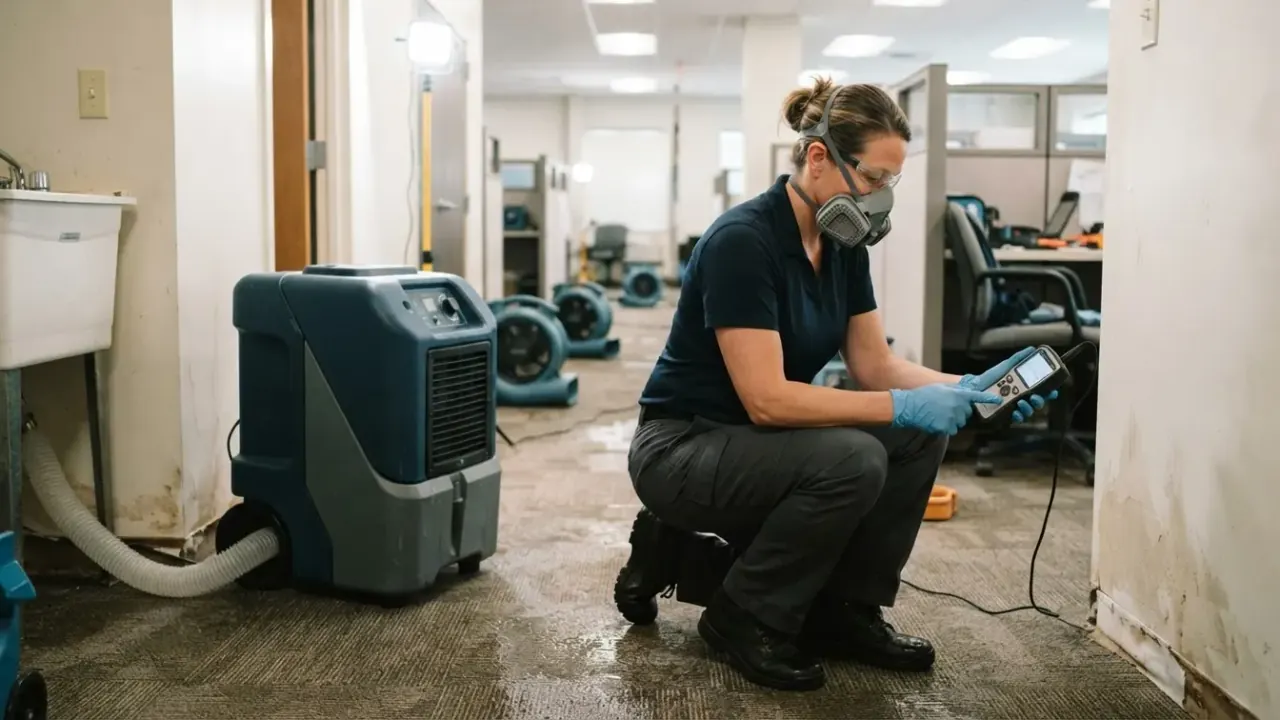
Structural drying
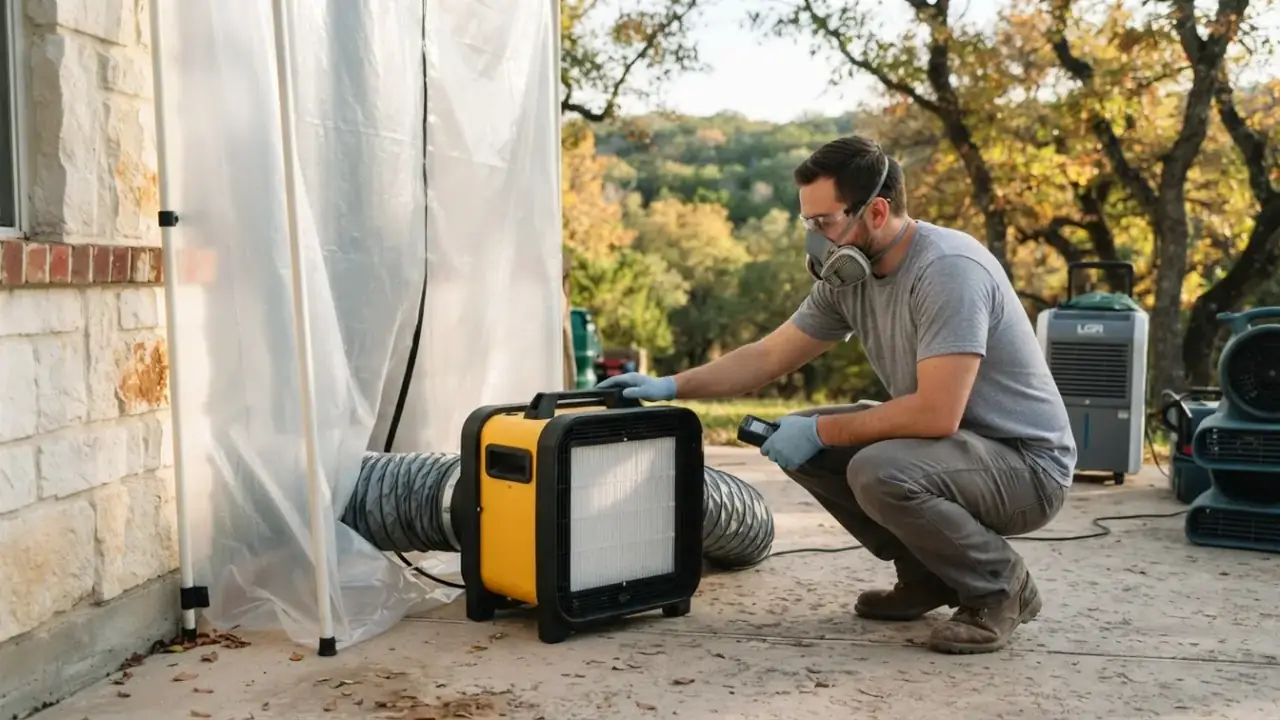
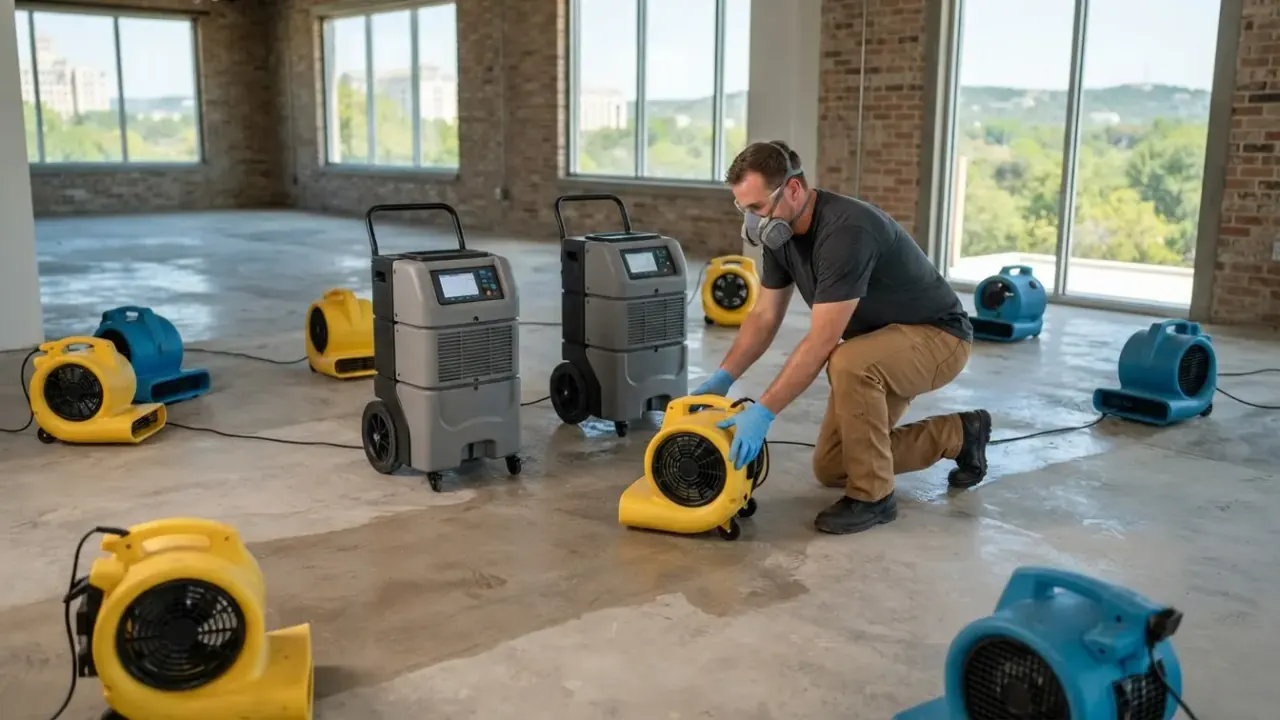
Air movers and dehumidifiers dry walls, floors and framing. Drying is verified with moisture readings, never guessed by touch.
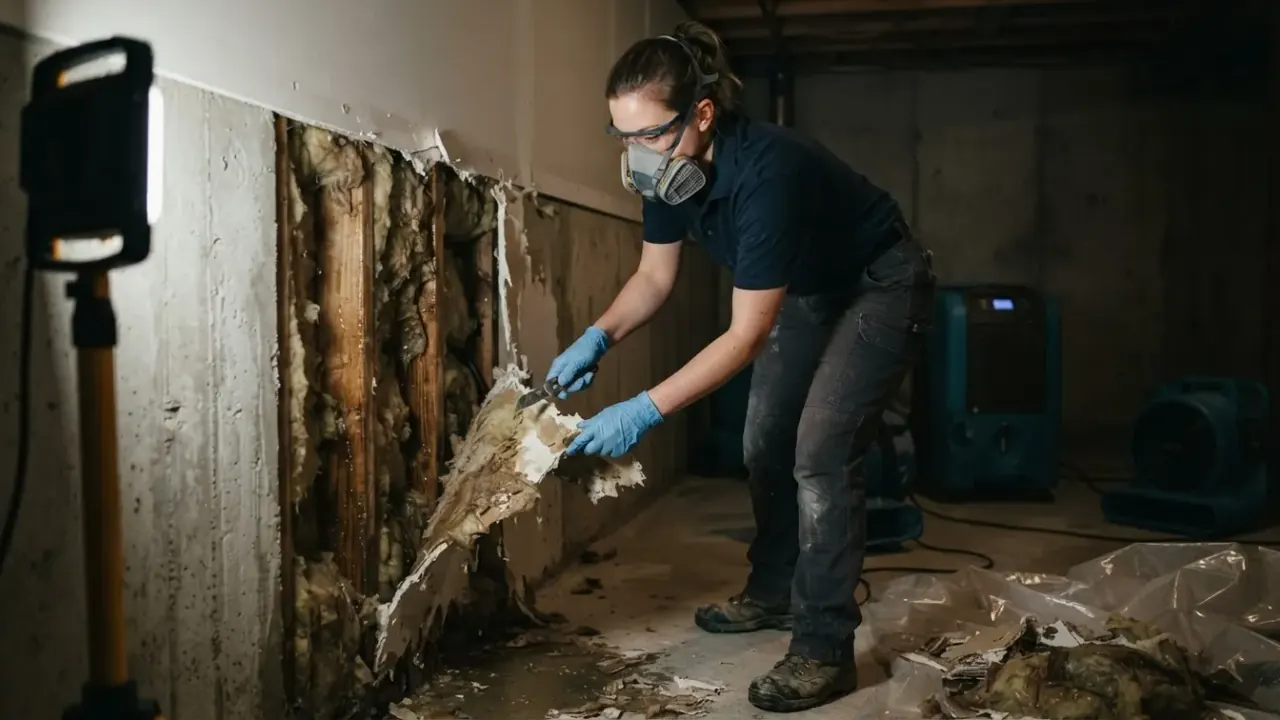
Cleaning & sanitizing
Affected materials are cleaned and sanitized. Anything that cannot be cleaned safely is removed, and the removal is recorded.
Repairs & rebuild
Ruined drywall, flooring and finishes are repaired or replaced — only after the structure underneath reads dry.
Homes, rentals and second homes.
Most Flagstaff restoration is residential. The process is the same; the scheduling and the paperwork follow who lives there — and who is away.
For Homeowners
Your home is restored to its pre-loss condition, with the written scope and the drying record in your hands at every step.
Family homes across Flagstaff's neighbourhoods
Kitchens, bathrooms and laundry rooms — the usual sources
Historic downtown homes with plaster and old timber
For Landlords, Businesses & Second-Home Owners
Rentals and empty homes are where Flagstaff water damage hides longest. Restoration is documented for owners, managers and insurers.
NAU-area rentals found wet between tenants
Second homes in Kachina Village and Fort Valley
Shops and offices after leaks and bursts
What is water damage restoration, exactly?
Two phases, one job. Mitigation limits the damage; restoration undoes it.
Restoration is the whole job of returning a water-damaged property to its pre-loss condition. It is often confused with mitigation, which is only the first phase: stopping the source, extracting the water and drying the structure so the damage stops spreading.
Restoration continues where mitigation ends — cleaning and sanitizing, removing materials that cannot be saved, and repairing or rebuilding what was ruined. In Flagstaff, the same home can need both phases after a January burst pipe or a July monsoon flood. Splitting them is paperwork; the work itself runs as one sequence.
Mitigation stops the damage getting worse. Restoration makes it as if it never happened — in that order.
What it is
The complete process of returning a water-damaged home to its pre-loss condition.
The two phases
Mitigation first — stop, extract, dry. Restoration second — clean, remove, repair.
What decides the scope
Where the water travelled and how long it sat, measured at assessment — not guessed.
What are the steps in the restoration process?
Five steps, in the order that keeps damage from spreading and repairs from failing.
Assess and stop the source
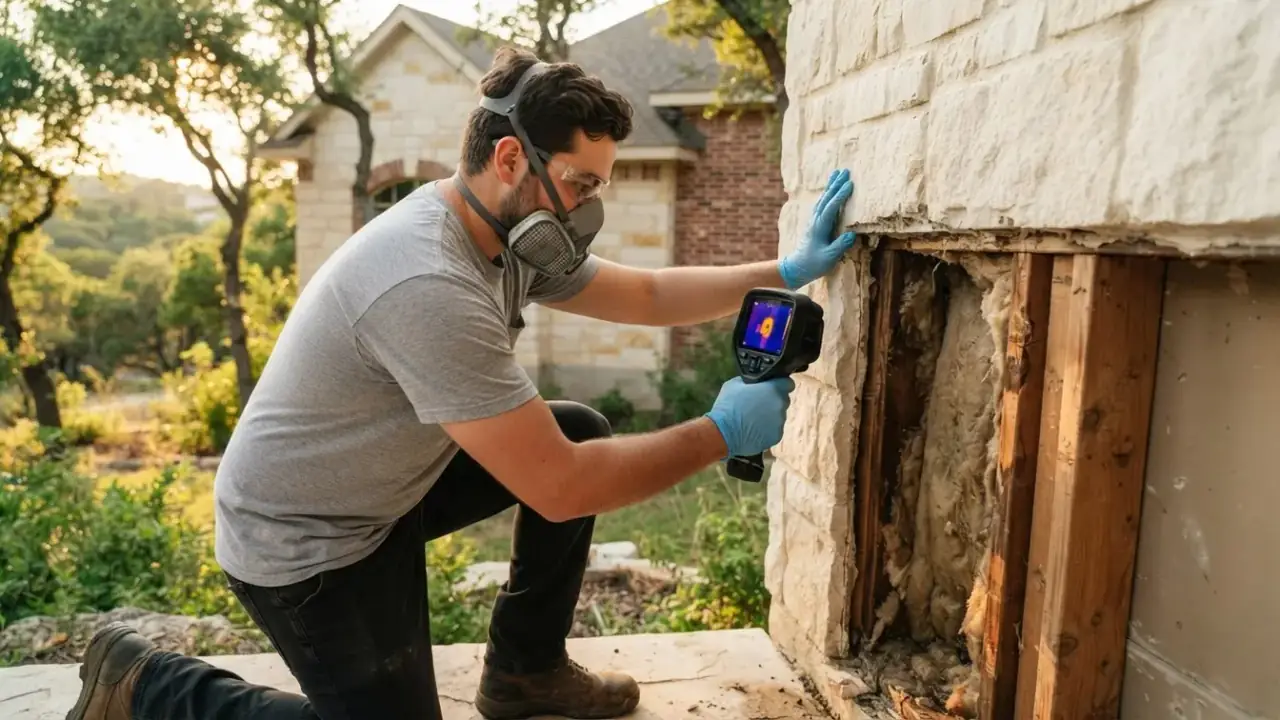
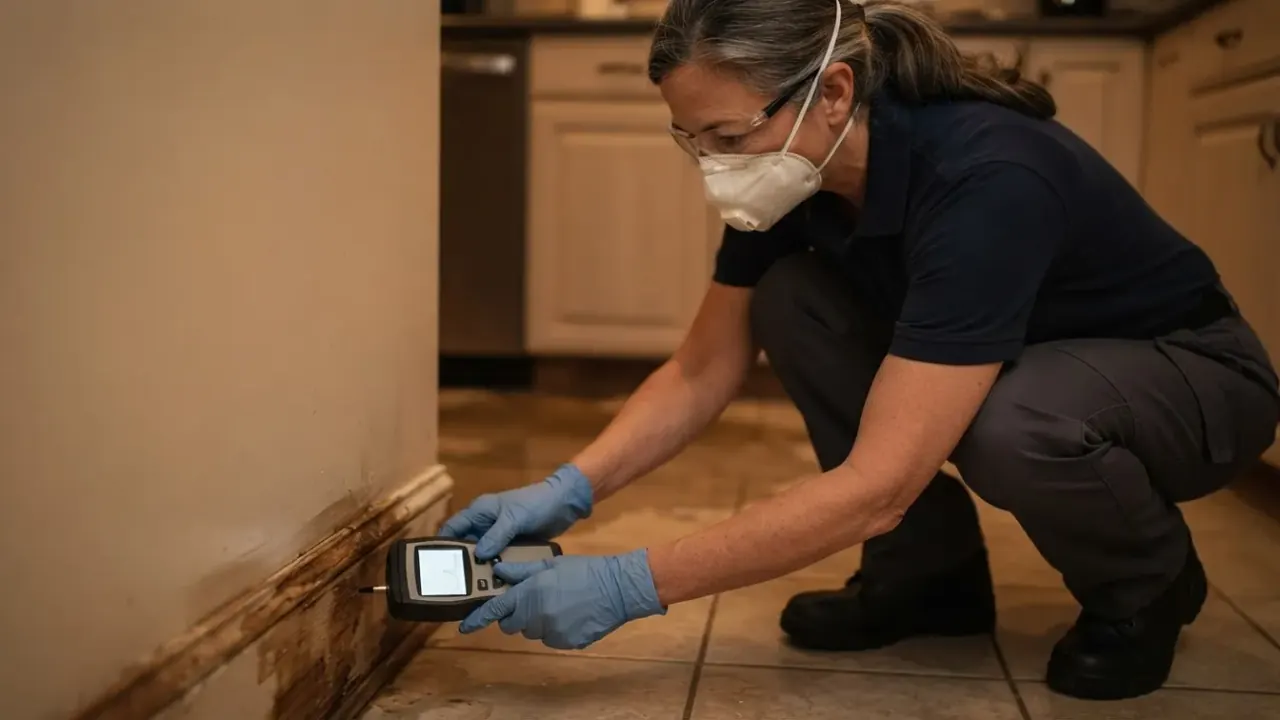
The leak, burst or flood entry is found and stopped. Moisture mapping shows how far the water travelled into walls, floors and ceilings.
Source stopped
Moisture map
Photo record
Extract standing water
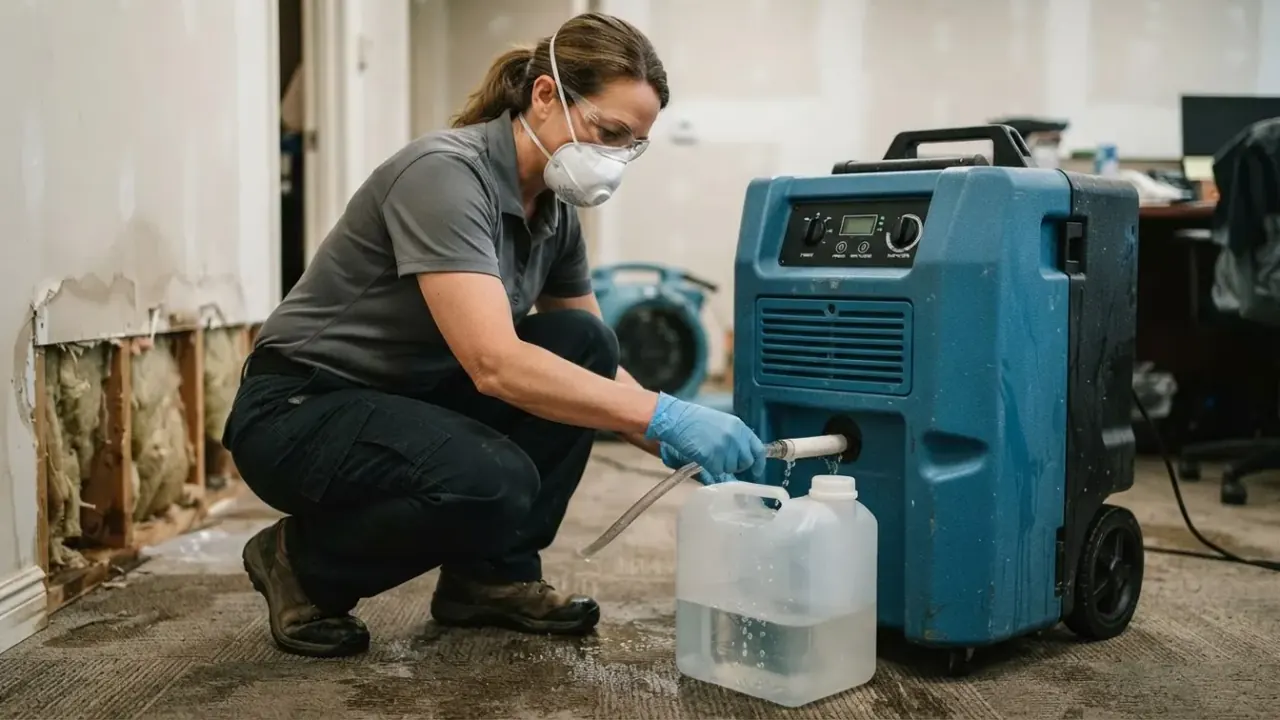
Pumps and extraction vacuums remove standing water from floors, carpets and wall cavities — the water removal step everything else depends on.
Pumps
Extraction
Contents moved
Dry the structure
Air movers and dehumidifiers dry walls, floors and framing. Readings are checked daily against dry targets, and equipment moves as drying progresses.
Air movers
Dehumidifiers
Daily readings
Clean, and remove what can't be saved
Surfaces are cleaned and sanitized. Ruined drywall, soaked insulation and warped flooring come out — each one recorded in the job file.
Cleaning
Sanitizing
Removal list
Repair and rebuild
Damaged materials are repaired or replaced on verified-dry structure. The finished work is walked through with you against the written scope.
Repairs
Finishes
Walkthrough
What tools are used in water damage restoration?
Move across a circle, or focus it and press Enter, for an illustrative thermal view of the photograph.
Extraction pumps & vacuums
They remove standing water fast — the step every other step depends on.
Air movers
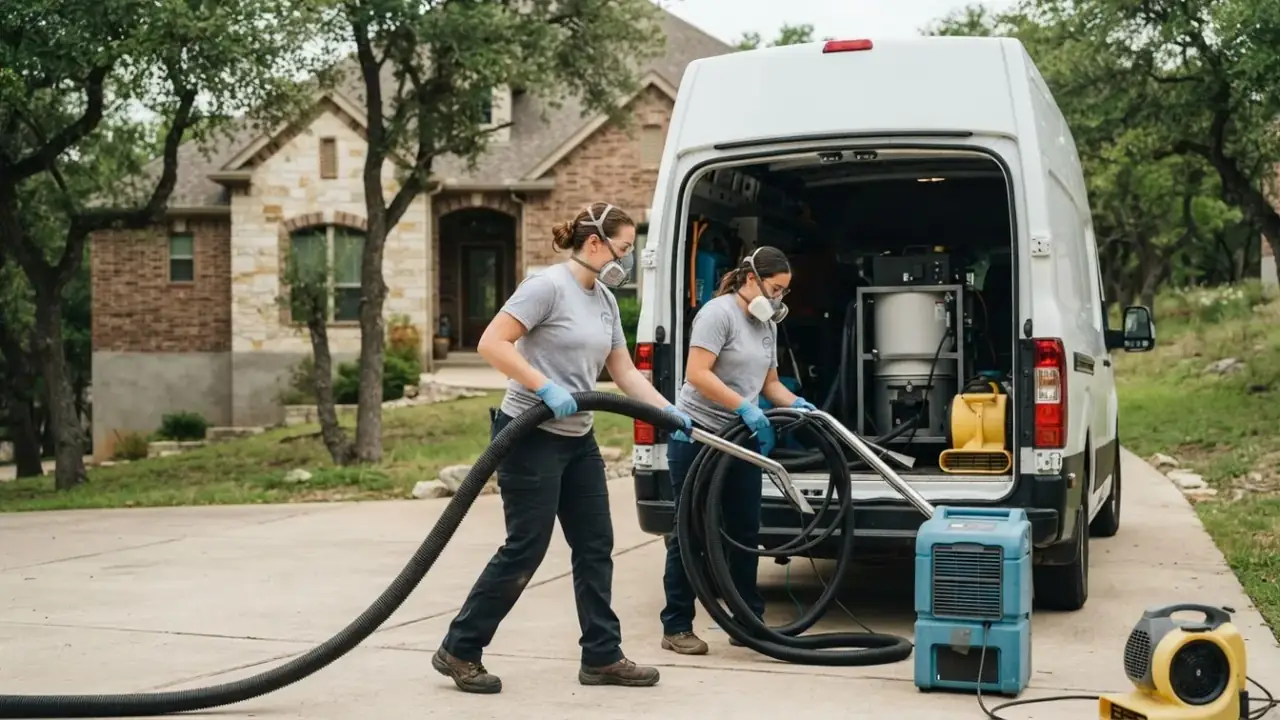
They drive evaporation out of walls, floors and cavities once the standing water is gone.
Dehumidifiers
They pull the evaporated moisture out of the air, so materials actually give up their water and dry.
Moisture meters & thermal imaging
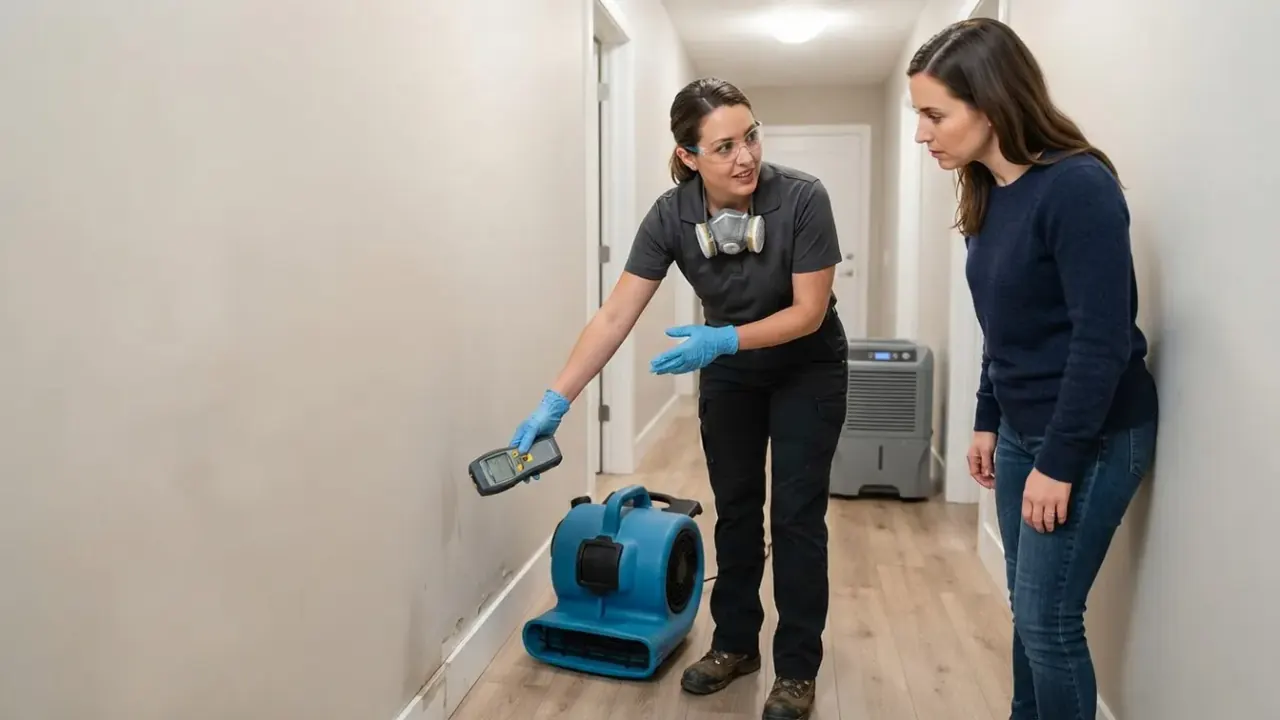
They find hidden moisture and prove dry. Readings open every job — and close it.
Thermal views are illustrative, generated from the photographs.
Methods
Moisture-mapped drying
Equipment is placed from the moisture map, not by habit. Readings move it as drying progresses.
Scope-from-record method
The work list is built from the assessment record — photos, readings and the removal list — not a walk-through guess.
Dry-gated repairs
No repair covers a material until its readings say dry. It is slower by days and cheaper by years.
SunnysideMount Elden EstatesDowntown
Restoration in Flagstaff: two seasons of water
Flagstaff water damage follows the calendar. Winter brings frozen and burst pipes, ice dams and snowmelt at about 7,000 feet. Summer brings monsoon flooding — most dangerous below burn scars, where the 2019 Museum Fire scar above Spruce Wash still sheds water into the streets below it.
Sunnyside & Mount Elden Estates: In the Museum Fire flood area — monsoon restoration here starts with mud, silt and lower walls.
Downtown: Early-1900s homes — old supply lines, plaster walls and layered additions hide leaks longer.
Kachina Village & Mountainaire: Second homes and rentals — bursts found late need full restoration, not a patch.
Fort Valley: The Snowbowl corridor — the heaviest snow and the longest freeze, with crawlspace pipes at risk.
Doney Park: East of the city along the Rio de Flag — monsoon runoff, and homes on wells and septic systems.
Assessment maps the water before any work is scoped.
Drying is logged until readings say the structure is dry.
Repairs finish the job — the home back to pre-loss condition.
Where the first phase ends and restoration begins
IllustrativeThe thermal view is generated from the photograph. It is not a measurement. Drag the handle, or use the arrow keys once it is focused.
One job, two phases
Mitigation — stopping the source, extracting the water and drying the structure — is the first phase of this service, and it has its own page: water mitigation services in Flagstaff. Restoration is everything that follows it: cleaning, removing what cannot be saved, and rebuilding the home to its pre-loss condition.
What problems does full restoration solve?
Extraction alone is not restoration. These are the problems that come back when the job stops halfway.
Moisture left behind wallsDrying stopped earlyHidden damp grows mold and rots framing unseen. Restoration verifies dry inside cavities, not just on surfaces.
Damage that keeps spreadingStanding water migratesWater left in floors and insulation travels and wicks upward into dry material. Full extraction and drying close the event.
Repairs that fail within a yearBuilt over wet structureFinishes over damp material blister, lift and stain. Restoration sequences every repair after verified dry readings.
Why one team for the whole restoration?
The team that mapped your moisture holds the record your repairs are scoped from. Nothing is handed off, and nothing is re-guessed.
Nothing falls between phases
Mitigation and restoration in one scope — the drying record flows straight into the repair list.
A record insurers accept
Photos, readings and the removal list document the loss from the first visit to the final walkthrough.
Pre-loss condition, defined
The target is written into the scope: the home as it was before the water, material by material.
Local causes, local sequencing
Freeze damage is restored before the next cold snap. Flood damage is documented while it is fresh.
What a written restoration scope covers.
What the scope lists before work starts, and what shapes it. For how restoration costs are built, see our water damage cost guide.
Included
Assessment and moisture map of the affected areas
Water extraction and standing-water removal
Drying equipment, placement and daily monitoring
Cleaning and sanitizing of affected areas
Removal list for materials that cannot be saved
Repairs to pre-loss condition, and the final walkthrough
The source, the moisture map and the photos from the first visit.
Drying log
Daily readings for every material, from first check to dry sign-off.
Photo record
Before, during and after photos — the loss, and the restoration.
Walkthrough record
The finished restoration, checked against the written scope.
Restoration, in three questions
The short version of bringing a wet home back.
What comes first?
The first phase: stop the source, extract the water, dry the structure. It limits how much damage happens — and it has its own page: water mitigation services.
Stop the source
Extract the water
Dry the structure
What is restoration?
Everything after mitigation: clean, remove what can't be saved, and repair the home to its pre-loss condition.
Clean & sanitize
Remove ruined materials
Repair & rebuild
How long does it take?
Drying runs until readings say dry — days, not hours. Repairs follow the written scope. Both are logged, never promised by a calendar.
Readings decide
Logged daily
No guessed dates
Materials and Systems We Work With
Extraction pumps
Air movers
Dehumidifiers
Moisture meters
Thermal imaging
Air scrubbers
Cleaning & sanitizing
Photo record
Service ZIP codes.
These are the Flagstaff ZIP codes we cover. Not listed? Call and ask — coverage follows the Flagstaff area, not a rigid map.
Based in Flagstaff at 2051 E Huntington Dr, covering neighborhoods across the city. These are areas we serve — call to confirm your street.
Sunnyside
Mount Elden Estates
Downtown
Southside
Doney Park
Kachina Village
Mountainaire
Fort Valley
Frequently Asked Questions
Water damage restoration is the process of returning a water-damaged home to a dry, safe condition. It covers stopping the source, extracting standing water, drying the structure, cleaning affected materials, and repairing what was damaged.
A restoration company finds and stops the water source, removes standing water, and dries walls, floors, and ceilings with measured moisture checks. It then cleans and sanitizes affected areas and repairs or rebuilds damaged materials.
The steps are assessment, water extraction, structural drying, cleaning and sanitizing, and repairs. Each step is checked with moisture readings before the next one starts, so nothing wet is closed in.
Professionals trace the source, map where water has travelled, and measure moisture in walls, floors, and framing with meters. They also check for hidden moisture behind surfaces and note what can be dried and what must be removed.
Common tools include extraction pumps and vacuums, air movers, dehumidifiers, and moisture meters. Thermal imaging can help locate hidden moisture, and the readings guide how long drying equipment stays in place.
Tell us what happened and where the water is. Calling is fastest when water is standing — reach us at (928) 766-1764, or send the form and we will take it from there.