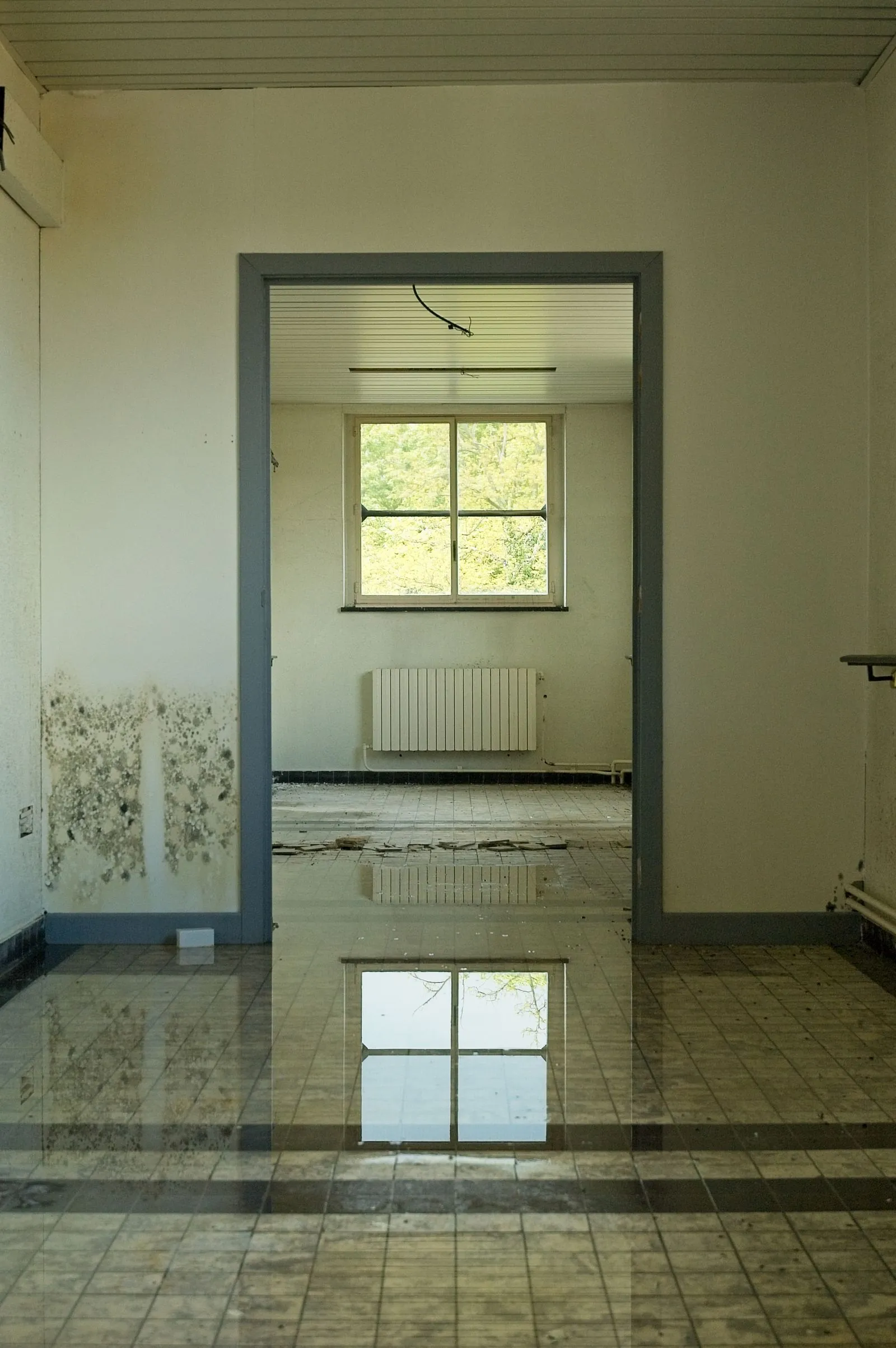
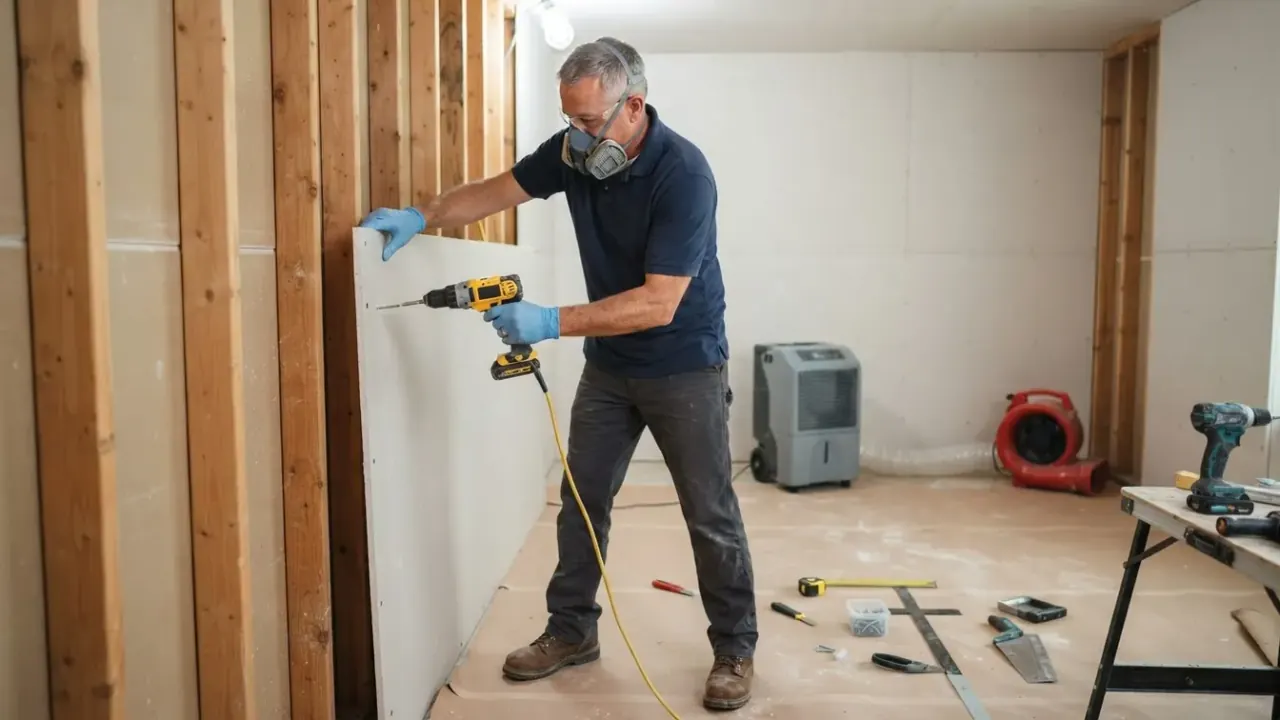
Flagstaff floods differently — monsoon storms, street-by-street runoff along the Rio de Flag, and burn-scar flooding after wildfire. Flood cleanup handles outside water on its own terms.
Arizona's monsoon season runs June 15 to September 30. Intense storms can drop heavy rain on Flagstaff in under an hour, and runoff follows the Rio de Flag and street grades — flooding is famously street-by-street, with one side wet and the other dry.
Wildfire changed the pattern. The Museum Fire (2019) burned the Spruce Wash watershed above the city; burn-scar soil sheds water instead of absorbing it. In 2021, monsoon floods hit Mount Elden Estates, Grandview, Linda Vista, Paradise Way and Sunnyside. Voters approved Proposition 441 in 2022, putting $26M into Spruce Wash stormwater works — the risk is reduced, not gone.
Inside water and outside water are different jobs. A burst pipe is a cleanup; a flood is a cleanup plus contamination decisions.
Flood season
Monsoon, June 15–September 30, with burn-scar flooding possible in any heavy storm.
Burn-scar areas
Mount Elden Estates, Grandview, Linda Vista, Paradise Way and Sunnyside flooded in 2021 from the Museum Fire scar.
First steps
Stay out of deep or fast water, photograph water lines, and call once water stops rising.
How does flood cleanup proceed?
Flood cleanup follows the water's retreat — then works through removal, decisions and drying in order.
Assess after the water drops
We check entry points, water lines and which materials soaked. Photos record the high-water marks for your files.
Entry points
Water lines
Photos
Remove water, silt and debris
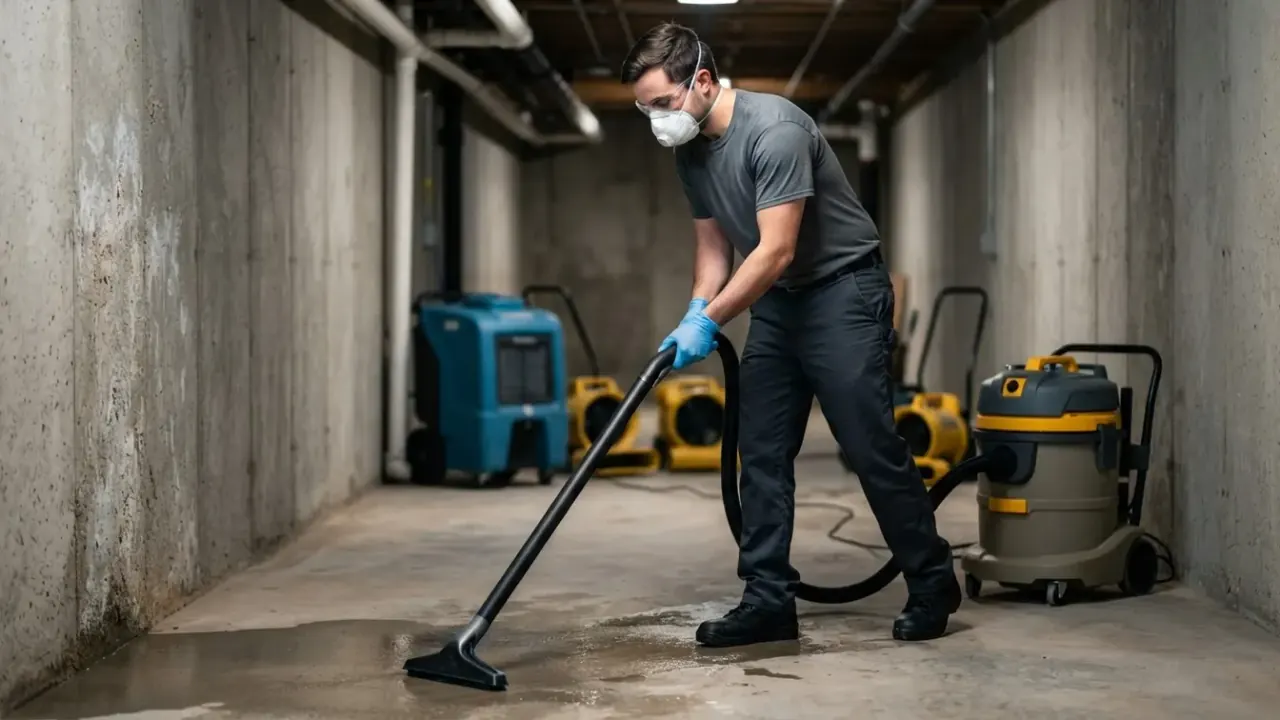
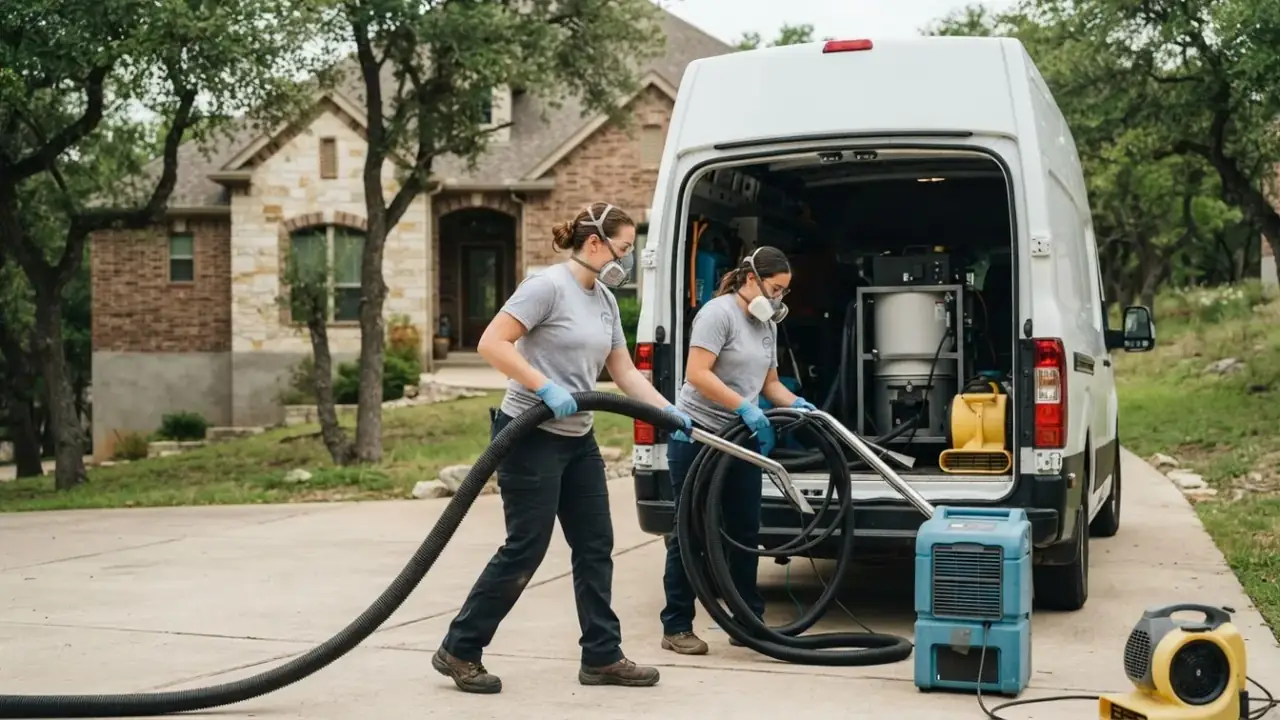
Pumps and extractors take out standing water. Silt and mud are cleared so surfaces can be assessed honestly.
Pumps
Silt removal
Debris clearing
Decide what stays and what goes
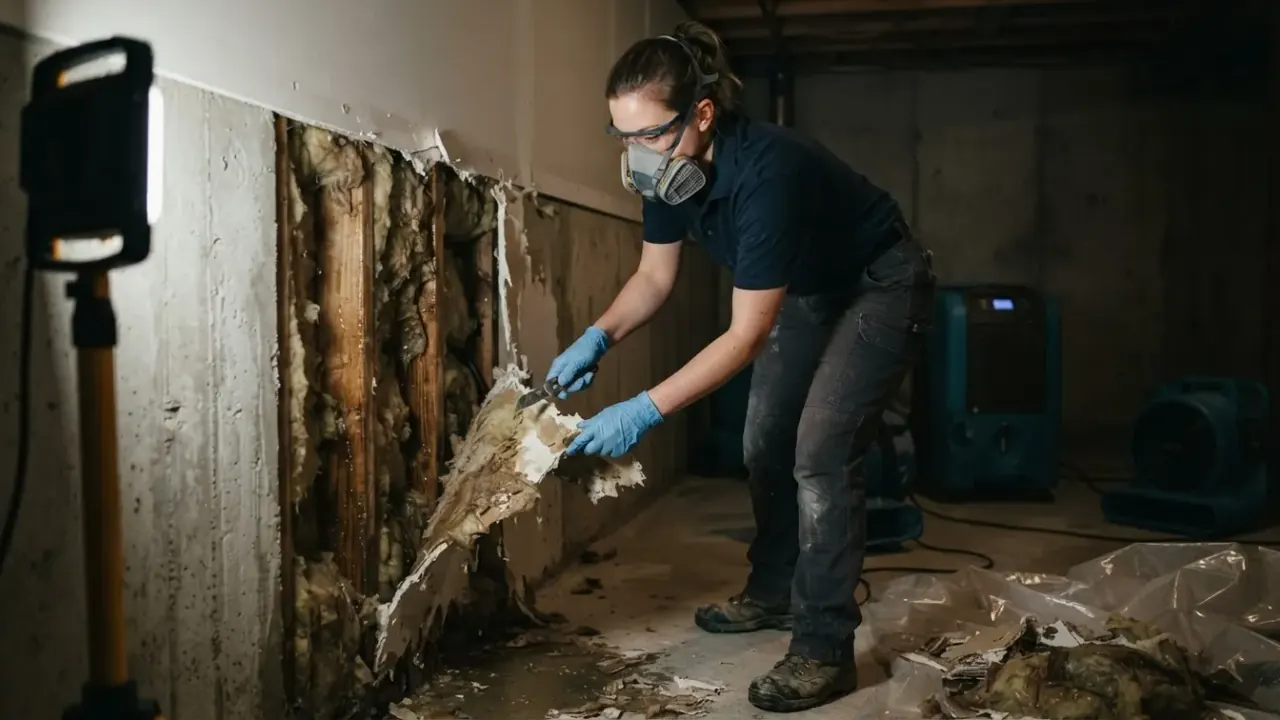
Porous materials soaked with floodwater are listed for removal; hard surfaces are cleaned. Each decision is explained before anything is cut.
Material list
Removal scope
Cleaning plan
Dry the structure
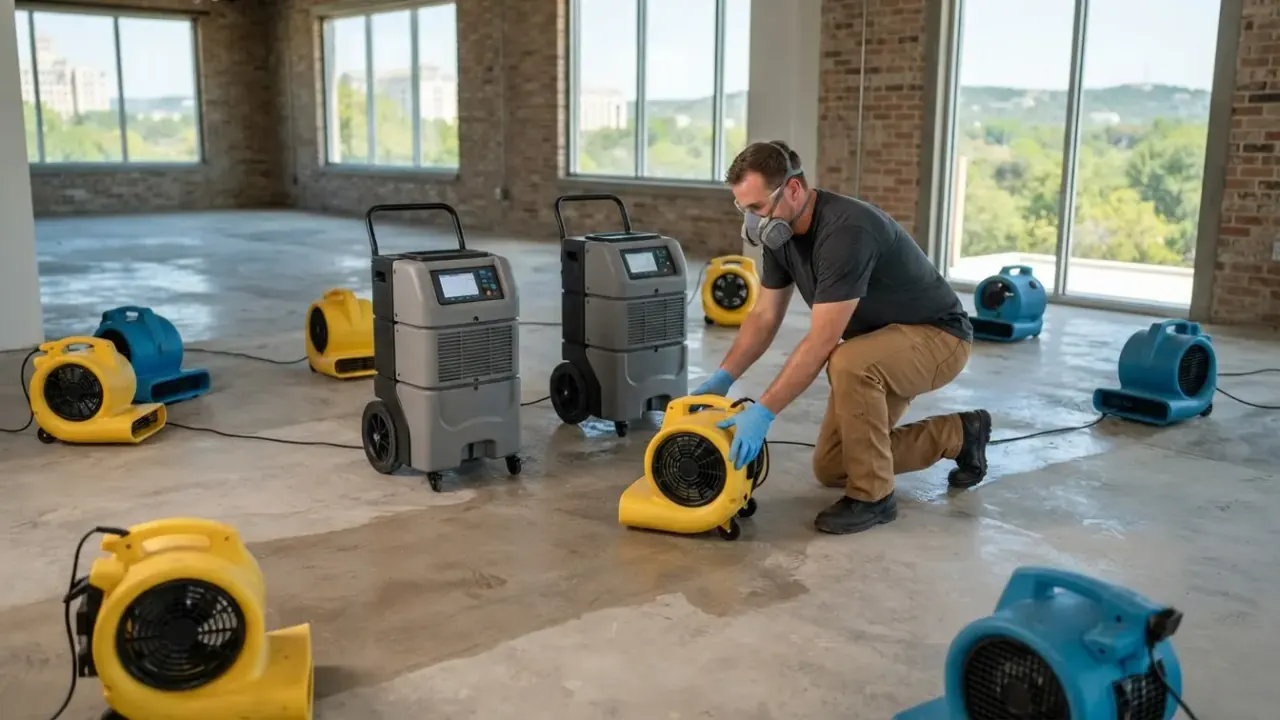
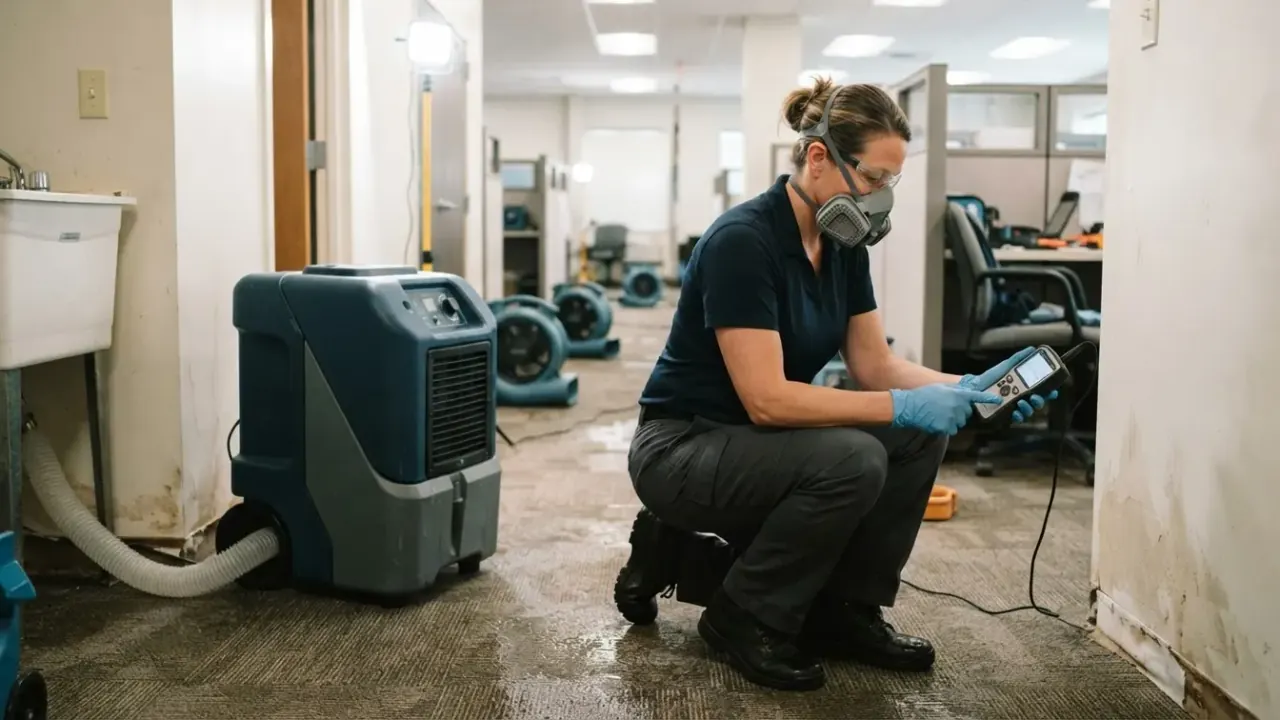
Air movers and dehumidifiers dry framing and remaining materials, monitored with readings.
Air movers
Dehumidifiers
Reading log
Final check and records
Dry readings are confirmed and the job file — photos, water lines, readings — is handed over for insurance or flood-program records.
Dry sign-off
Job file
Next-step notes
What equipment does flood cleanup use?
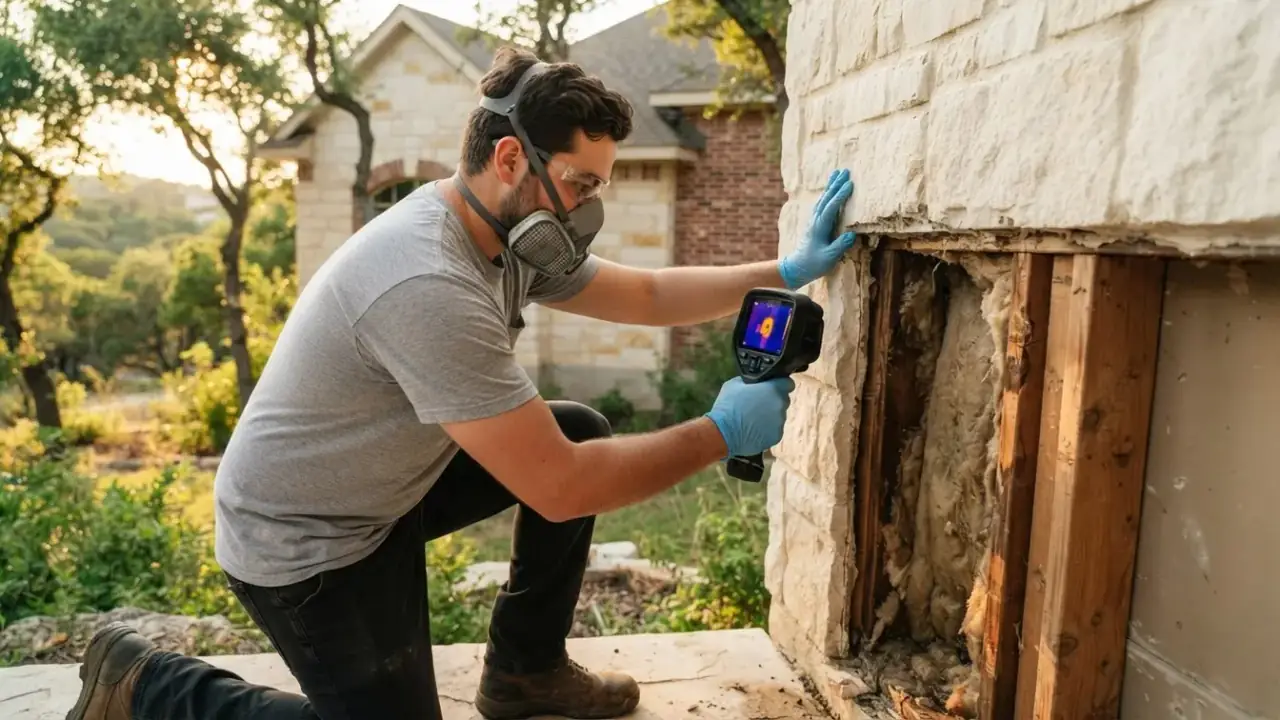
Move across a circle, or focus it and press Enter, for an illustrative thermal view of the photograph.
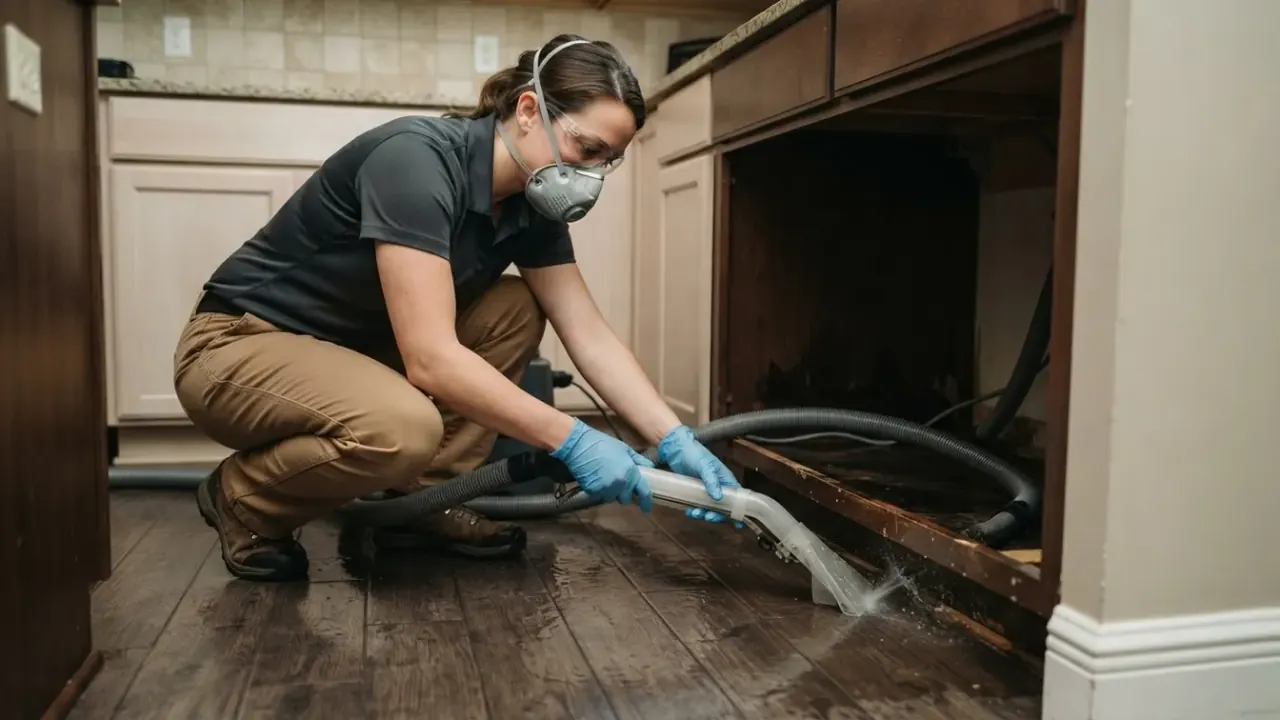
Pumps and extractors
For standing floodwater and the last water in low rooms and garages. Volume first, then detail extraction.
Moisture meters
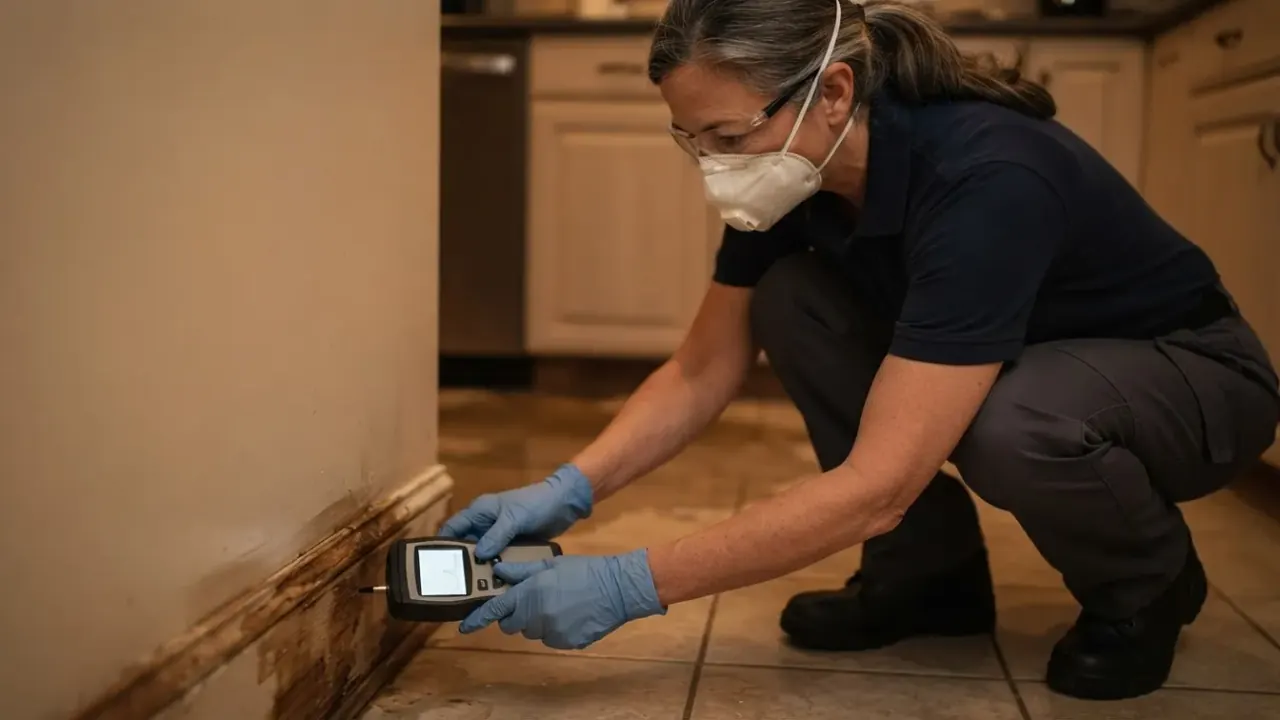
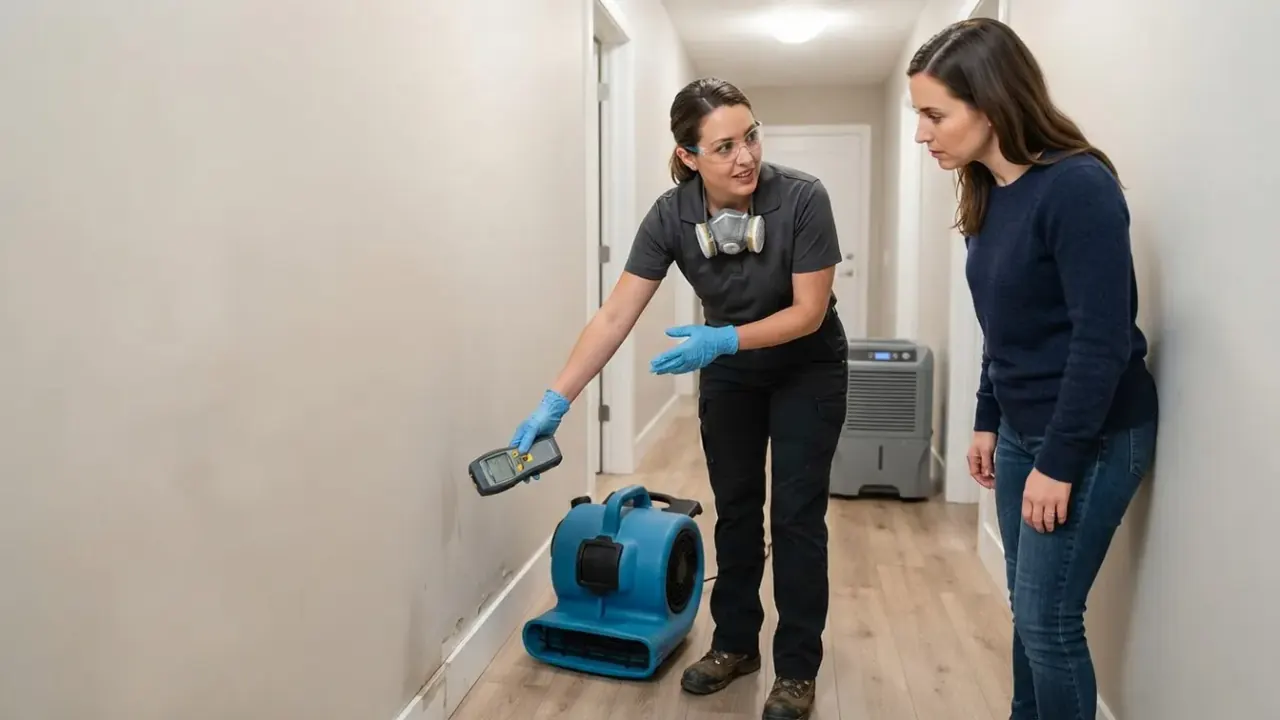
They show how far floodwater wicked into walls and floors — usually higher than the visible line suggests.
Air movers and dehumidifiers
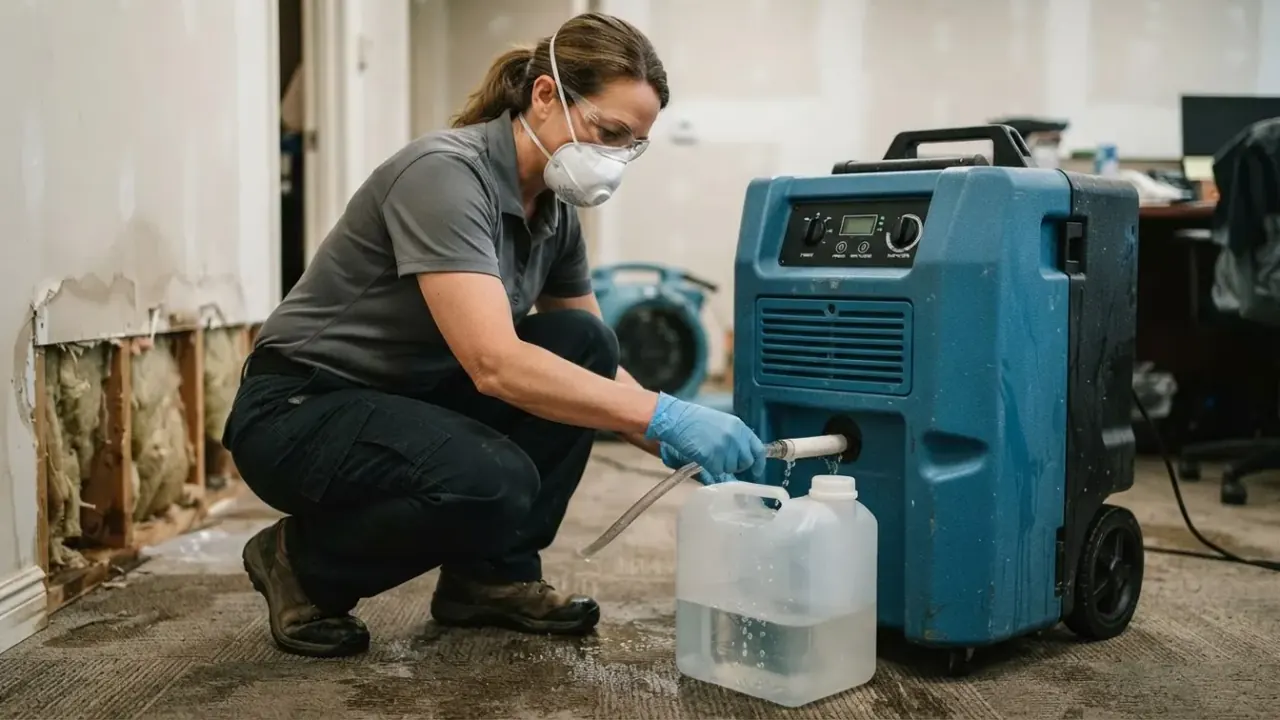
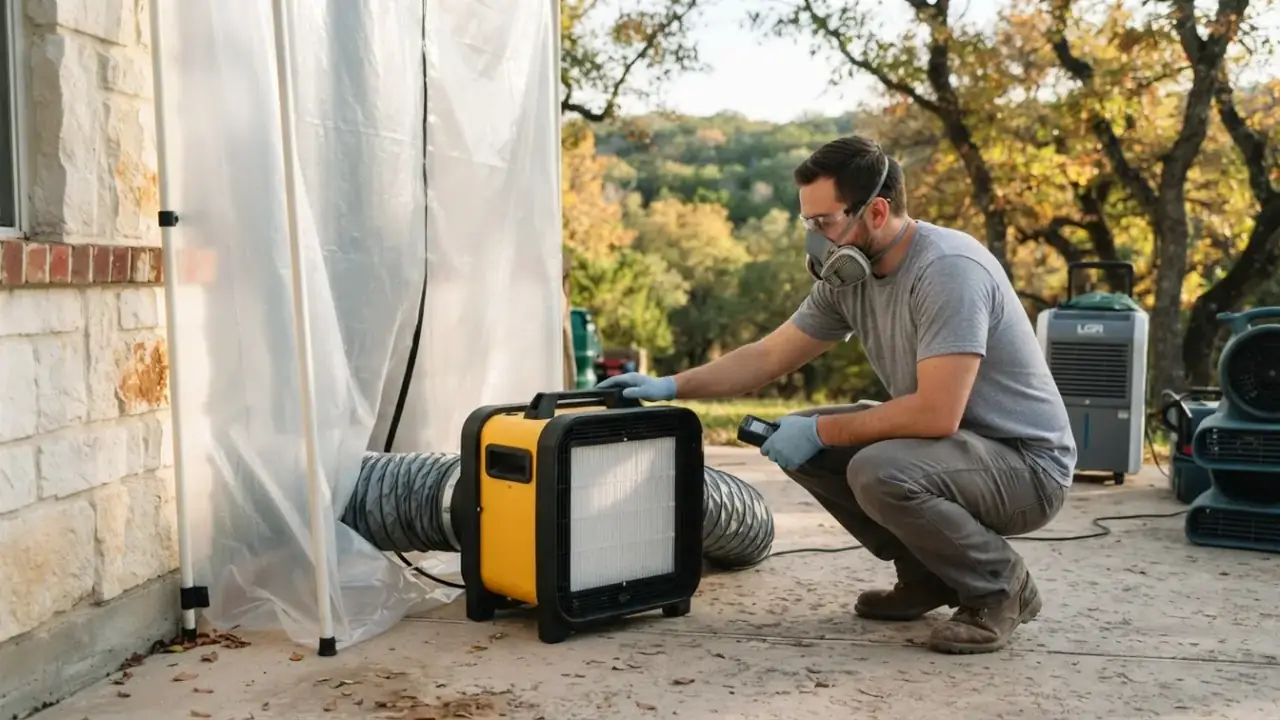
Drying equipment placed after removal, monitored until readings reach dry targets.
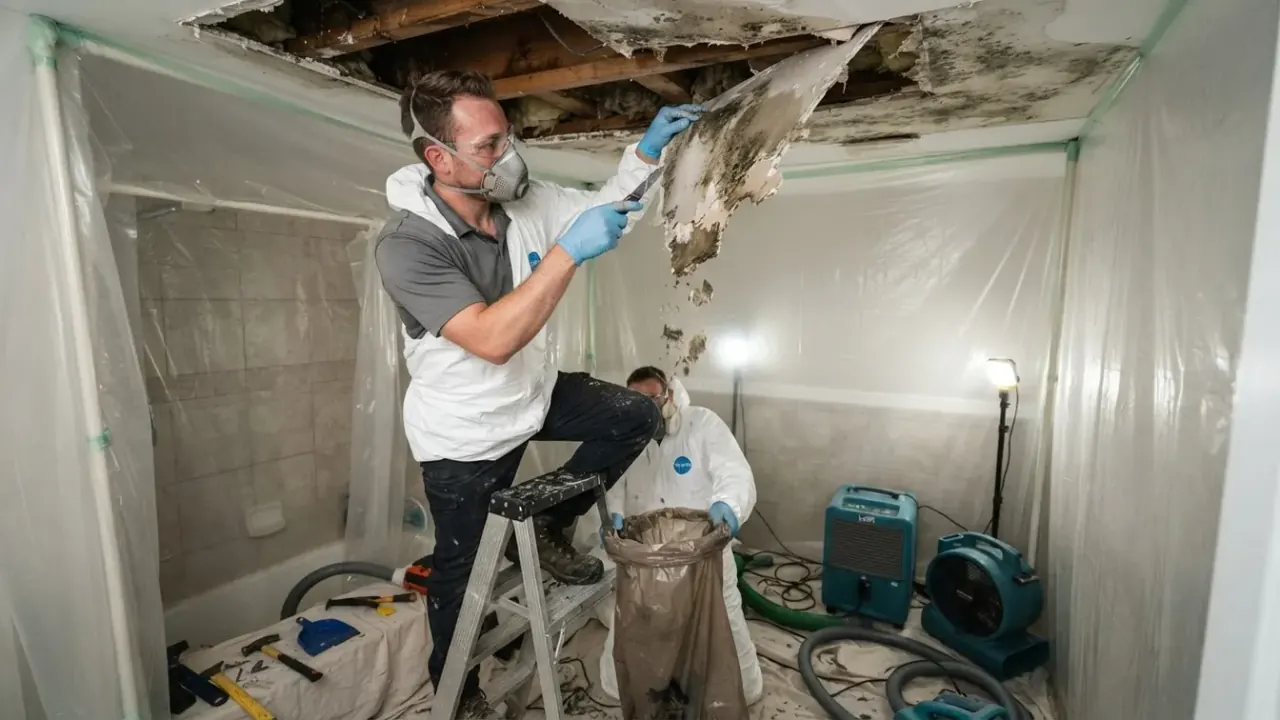
Cleaning and containment gear
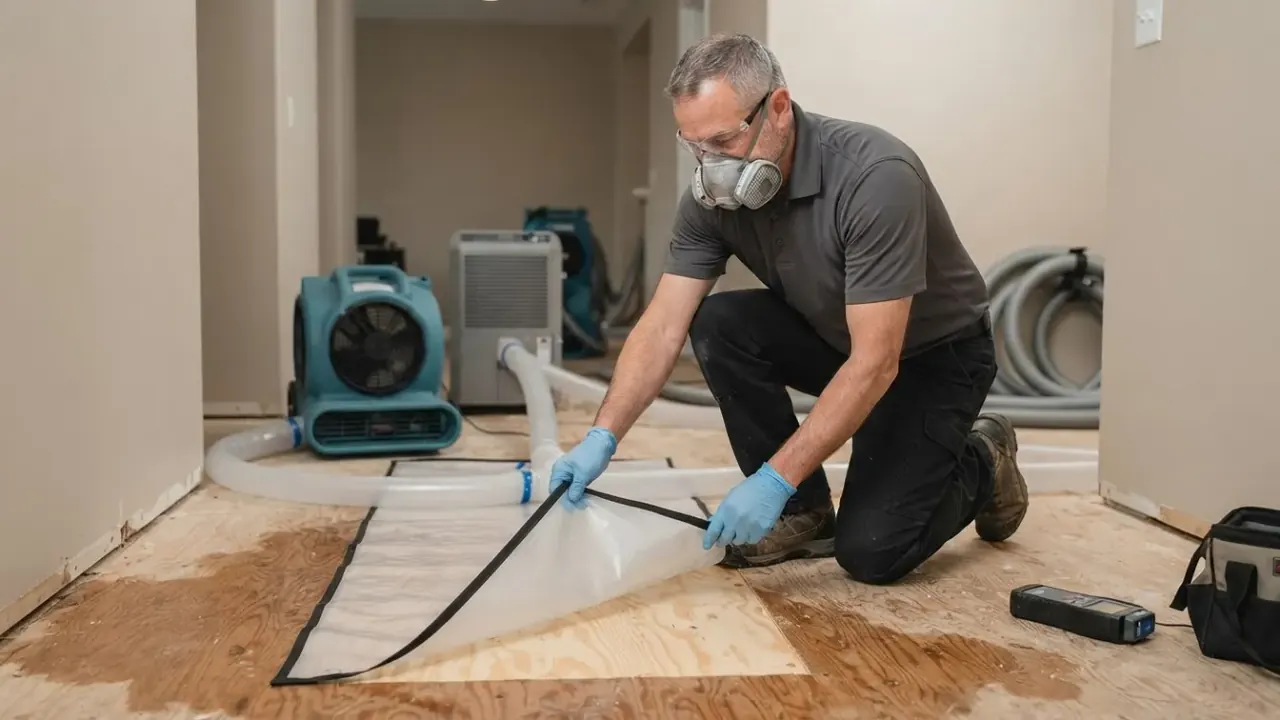
Flood-affected areas are contained and cleaned as contaminated space. Porous soaked materials are removed, not just wiped.
Thermal views are illustrative, generated from the photographs.
Methods
Water-line documentation
High-water marks are photographed and measured. Insurers and assistance programs ask for exactly this.
Contamination-first decisions
Floodwater carries soil, fuel and sewage risk. Decisions about porous materials start from that fact, not from saving everything.
Entry-point review
Doors, vents, garage thresholds and window wells are checked so the next storm's water has fewer ways in.
Mount Elden EstatesSunnysideParadise Way
Flood cleanup in Flagstaff's flood neighborhoods
Cleanup here is local by necessity. Streets below the Museum Fire burn scar flood on runoff that upstream streets never see, and Rio de Flag neighborhoods flood on channel capacity. Knowing which pattern hit your home changes what we check — and what we tell you to prepare for next season.
Mount Elden Estates: Below the Spruce Wash / Museum Fire scar; flooded in 2021 and first in line for burn-scar runoff.
Sunnyside: Flooded in 2021; basin and drainage work continues, and low streets still take monsoon water.
Grandview, Linda Vista and Paradise Way: Named in the 2021 burn-scar floods — sandbag readiness is a summer habit here.
Sandbags: The city provides sandbag stations in flood season; bags at door thresholds and garage entries are the first line, not a guarantee.
Prop 441 works: $26M of Spruce Wash stormwater projects are reducing risk upstream — homes should still plan for storm runoff.
We record water lines and entry points with photos.
Water, silt and debris are removed; soaked porous materials are listed.
Drying runs to verified readings, and you keep the job file.
Floodwater vs. clean water damage
IllustrativeThe thermal view is generated from the photograph. It is not a measurement. Drag the handle, or use the arrow keys once it is focused.
Source
Floodwater: Comes from outside — streets, washes, saturated ground. Treated as contaminated.
Clean water: Comes from supply lines and appliances inside the home.
The source decides cleaning, material decisions and how insurers classify the loss.
Materials
After flooding: Soaked carpet pad, insulation and lower drywall usually come out.
After clean water: The same materials can often be dried in place.
Meter readings and material type — not guesswork — drive each call.
Insurance
Flood damage: Standard home policies generally exclude flood; flood cover is separate (NFIP).
Sudden inside leaks: Often covered, subject to your policy.
Our insurance guide explains the distinction in plain language.
What problems does flooding leave?
A flood's damage list is longer than wet floors — silt, contamination and hidden wicking all count.
Silt and contaminationRunoff leaves more than waterMonsoon runoff carries soil and street contaminants into the home. Cleaning decisions start from that, not from clear-water rules.
Wicking above the lineWalls soak higher than the flood reachedDrywall and insulation wick floodwater above the visible line. Meters find the real top edge before anything is closed up.
Repeat floodingThe same streets flood againCleanup includes an entry-point review so the next storm meets sandbags and sealed thresholds instead of open doors.
Why flood cleanup is its own service
Treating a flood like a big leak under-cleans the home and misleads the claim. This page exists because the jobs differ.
Contamination handled honestly
Porous materials that soaked up floodwater are removed, not perfumed. That protects the home's air and the people in it.
Documentation that matches the loss
Water lines, photos and readings are what flood claims and assistance programs ask for. The file is built as we work.
Drying verified, not assumed
Framing and floors dry to meter targets before repairs. See how our structural drying service verifies dry.
Preparation for next season
Entry points and sandbag positions are noted while the flood is fresh in everyone's mind — not next June.
What a written scope covers.
What a written flood scope covers and what shapes it. For how restoration costs are built, see our water damage cost guide.
Included
Entry-point and water-line documentation
Removal of standing water, silt and debris
List of flood-soaked materials for removal
Cleaning of hard surfaces
Drying equipment placement and monitoring
Readings log and complete job file
Depends on
Depth and duration of flooding
How many rooms and levels took water
Amount of silt and debris
Which porous materials soaked
Whether flooding is likely to repeat during the job
Based in Flagstaff at 2051 E Huntington Dr, covering neighborhoods across the city — including the burn-scar flood areas. Call to confirm your street.
Sunnyside
Mount Elden Estates
Downtown
Southside
Doney Park
Kachina Village
Mountainaire
Fort Valley
Frequently Asked Questions
Stay out of deep or fast-moving water, and do not wade through floodwater if you can avoid it. If it is safe, move valuables up and photograph water lines and entry points. Cleanup starts once the water stops rising and begins to drop — call (928) 766-1764 so removal can be arranged as soon as conditions allow.
Generally, no — standard homeowners policies exclude flooding from outside water, and flood cover is bought separately, mainly through the National Flood Insurance Program (NFIP). Damage from a sudden inside leak is a different category. Our insurance guide walks through the distinction and the documentation each type needs.
Sandbags at door thresholds, garage entries and low vents can divert shallow runoff and buy time in a monsoon storm. Flagstaff provides sandbag stations during flood season, especially for burn-scar neighborhoods. Bags reduce shallow flooding; they do not stop deep or fast water, and cleanup may still be needed afterwards.
Tell us what happened and where the water is. Calling is fastest when water is standing — reach us at (928) 766-1764, or send the form and we will take it from there.